When brewers and cheesemakers find new ways to collaborate, we all win.
The post Beer Cheese Is Having a Moment appeared first on CraftBeer.com.
When brewers and cheesemakers find new ways to collaborate, we all win.
The post Beer Cheese Is Having a Moment appeared first on CraftBeer.com.
In California, craft beer and wine are both power players, but a refreshing beer at the end of the day seems to be a popular thirst-quencher whether your line of work is fermenting grapes or grains.
The post It Takes a Lot of Beer to Make Good Wine appeared first on CraftBeer.com.
 John Palmer guides you through brewing this delightful beer, that is widely praised but far too often poorly replicated. John Palmer guides you through brewing this delightful beer, that is widely praised but far too often poorly replicated.
 I used to do a talk titled "Embracing Homebrewing" (here it is on the Beersmith Podcast). Basically, rather than worry about replicating the exact process/results of a craft brewery, enjoy the things that you can do on a small scale without regulatory oversight (dosing in spirits, ice distillation, foraging) or economic pressures (expensive ingredients, not worrying about extract efficiency) etc.
The more great brewers I talk to... the more I realize that Scott and I run Sapwood Cellars like a big homebrewing operation more than a small craft brewery. We're lucky that we have enough support and direct sales that don't have to worry too much about cost, time, or efficiency. This post dives into that a little deeper on the benefits of inefficiency using the six beers included in the upcoming shipment of our Out-of-State Shipping Club as examples!

Variability: Flemish Gothic
Most mixed-ferm breweries have a single house culture they pull off a tank or set of barrels or a specific commercial microbe blend that they add to every batch of a given beer. It makes a lot of sense, it promotes consistency and you don't have to worry about blending/attenuation. However, for me it lacks the dynamic flavor options and variety in finished beers I love. Every time we brew a new sour base beer, we select a barrel with a culture that suits it, and add some to primary (along with a healthy Saccharomyces pitch).
Flemish Gothic is a beer we blended from three different wine barrels, with three different base sour reds (Standard Red, Provisional Strength, Vin De Céréale) each with a different culture. That allowed us to dial in the acidity, malt balance, and level of Brett expression. It worked out that we did a three-year blend rather than the standard old/young blend done by Rodenbach and many other Flemish Reds.

Flemish Gothic Tasting Notes
Smell - Real range, right from the start. Honey, leather, blackberry fruit leather, some dried hay of hops. Cocoa, Tootsie Pop. I could see Balsamic, but without the vinegar or nail polish.
Appearance - Beautiful ruby red. Good clarity. Stable off-white foam, pours three fingers.
Taste - Bright lactic acidity, with dried cherries in the finish. No acetic harshness in the finish. Mild perceived fruity sweetness. A little damp oak, but not aggressively woody despite the extended aging thanks to the well used barrels. Could have even used a little more. Slight licorice as it warms.
Mouthfeel - Medium body, pretty smooth. Firm carbonation. Slightly oaky astringency.
Drinkability - Really good, lots of malt/barrel/Brett character all working together without excessive acidity. One of my favorite sours we’ve done, right up there with Growth Rings. I’d like to blend something similar again in a few years.
Changes for Next Time - A few people suggested more acidity, but I like it as is. It’s considerably more acidic than my recollection of Flemish Kiss from Commons. I’ll be looking forward to seeing how this one ages.

Effort: Gindicators 2024
Local in-season fruit is less expensive than buying IQF or Puree. What you are paying for with those is convenience and consistency. Buying locally requires figuring out who grows good produce, building relationships, and being on top of communication. For Gindicators, we sourced peaches, nectarines, and apricots as the summer progressed. I picked through them each day, processing and freezing the fruit that was ripe. Waiting on the rest. It's worth it for me to go that extra length to create the best stone fruit aroma possible!
We paired that with a low-acidity (higher hoping rate) pale base aged in gin barrels. Stone fruit in general and apricots in particular bring a lot of their own acidity. After refermentation we blended in a 30 gallon "double gin-barrel-finished" higher-acid beer to add more gin character.

Gindicators 2024 Tasting Notes
Smell - Funky nose, damp hay Brett. As a result, it reads more saison-ish than our sours usually do. Melds in a fun way with citrus and rosemary notes from the barrels. Plenty of stone fruit, yellow peach especially, but leaves room for the other aromatics. Pez candy. Overall vibrant and varied.
Appearance - Mild haze, bright yellow body. Sticky white head, good density. End of the bottle pour has some small yeast floaties. Seems like more yeast adhered in the bottle than usual too. Maybe the 58W3 from refermentaiton?
Taste - Snappy acidity (malic?), glad we selected lower acid barrels for this one! Tastes more acidic than the >3.5 pH suggests. Lots of fresh apricot and nectarine on the palate. Minimal sweetness. Juniper comes through in the finish, piney, Sprite-like. Faint bitterness from the higher IBU component in the blend.
Mouthfeel - Firm carbonation. Light body, but not tannic or harsh despite the extended aging.
Drinkability - The acid level is just about right for my tastes, lingers for a second, but then goes.
Changes for Next Time - Not much to change on this one. I could be tempted to go up 25% on the fruit, it had a little more punch before we blended in the last 30 gallon gin barrel. Likely wasn’t necessary to repitch yeast so soon after refermentation on the fruit?

Process: Neologism 2024
We treat our sour beers with the same care and attention to sanitation and oxygen ingress as we do our Hazy IPAs. We purge the barrels and bottles with CO2, we fill the blending tank with water and push it out to remove all of the oxygen before transers. I think it really shows with the "vibrancy" of the aromatics we are able to achieve, especially in a dry hopped sour like Neologism. It goes into the blending tank on hops, and infuses cold for 48 hours before bottling. Since we can't do a water push out with the hops in there, we do the push out, then add the hops while purging with CO2.
The only previous batch of Neologism was named to Craft Beer & Brewing's Top 20 of 2022... that was the only beer we ever entered into a contest of any type!

Neologism 2024 Tasting Notes
Smell - Expressive in the nose with the gin shining. Spruce tips. Barnyard. Hops aren't as "raw" as an IPA, but it is still fresh smelling.
Appearance - Head is great (dense, long lasting). Slightly hazy golden.
Taste - A little of that guava thing from the first batch is starting to come through, awesome. Pleasant acidity, tart, but not harsh. Gin is a little more savory-herbal than previous gin beers: rosemary, spruce, bruised basil. A touch of oaky-vanillin as it warms.
Mouthfeel - Light astringency, firm carbonation. Light body.
Drinkability - I think this one will continue to improve as the edges soften and the hops integrate more. Still wish we could get more of those McClintock Reserva barrels, but even the second use one really helped this one!
Changes for Next Time - On point! Not this beer… but would still love to do a Tangerine-Gin and/or a Guava Gin at some point.

Risk: Honeymoon SZN
We try a lot of different things that "sound like a good idea." It would certainly be easier and more reliable to pick a slate of brands to make every year. We do rebrew/blend the same beers occasionally, but we don't have a firm schedule and we always try to leave room for inspiration based on what barrels, ingredients, and flavors we have available.
For Honeymoon SZN we started with a collab we brewed at Olde Mother Brewing (Frederick). Wedding SZN was a rice ale with Nelson Sauvin, elderflowers, and Phantasm (along with a natural thiol-releasing yeast strain). We racked it to white wine barrels and let the resident culture work. I sourced muscadine/scuppernong grapes (indigenous) through a local farmstand that has a relationship with a grower in South Carolina. I knew it was a good idea from the aroma of my car on the way back - halfway between Nelson Sauvin and Strawberry candy!

Honeymoon SZN Tasting Notes
Smell - Muscadine really comes through. Lots of white grape juice. Some toasty-funk, but not a primary aroma when cold. Bridges the gap between the Nelson and Brett.
Appearance - Clear. Very pale yellow. Good thick white head that doesn’t last long.
Taste - Light acidity, even less than Life is Ridiculous. Good fruit character, unique, fresh. A touch of funky smoke in the finish I haven’t noticed before. No elderflower.
Mouthfeel - Bright, light, spritzy.
Drinkability - Good, could use a touch more acid, but it is very drinkable as is.
Changes for Next Time - Not sure muscadine is a star… would be fun with a light dry hop. Maybe with another fruit, stone fruit?

Time: Opulence 2024
We age our beers for a long time. Years ago I visited an established brewery that had just added a large barrel facility for sour beers. The brewer running it mentioned he had to meet a monthly production quota for packaged product. Just seems impossible for that to produce fantastic beer. Sometimes we go a month without bottling anything because the beer isn't ready yet... sometimes we are doing back-to-back runs because we don't want something to sit any longer! Opulence 2024 was supposed to be Opulence 2023, but the beer just wasn't ready for the cherries after 8 months in the barrel... but it was at 20 months! We had some leftover high-acidity beer from the previous batch of Opulence kegged off that we blended in with the "fresher" beer that was aged in second-use Cherry Brandy barrels.

Opulence 2024 Tasting Notes
Smell - Reminds me of my homebrews (in a good way). Funk (leathery) really comes through along with cherry and almond. Cherry is really fun, lots of cherry pie, vanilla, and depth. Nothing weird from the cherry brandy barrels considering the previous use was Imperial Stout.
Appearance - I wish the clarity was a little better, but the color is a pleasant amber-orange. Great off-white head.
Taste - Mild acidity, could be a little higher. Detectable bitterness (maybe a hair high). Good cherry flavor, sour cherry pie, vibrant.
Mouthfeel - Light astringency, which is disruptive to the smoothness. Firm carbonation, medium-thin body.
Drinkability - It’s solid. I like the lower acidity compared to past batches, but the bitterness gets in the way.
Changes for Next Time - I wonder if aged hops rather than fresh in the whirlpool would work without providing any weird aromatics? I really like what the Saaz in the whirlpool did for the aroma and balance (lower acidity), but the bitterness clashes with the acidity in flavor… despite being “only” 19 IBUs. Maybe better to go with some alpha acid extract in the tank?

Equipment: Stained 2024
One thing that has worked out well for us is having smaller equipment. Rather than be forced to do big blends, we have equipment that is sized for flexibility. For example, with Stained we age it on wine grapes and raspberries separately. I'm sensitive to the "seedy" flavor that comes from long contact time with raspberries... but I also enjoy the deeper flavors of extended skin contact on grapes. So for this batch we kegged off the raspberry half after two weeks, while the Merlot grapes continued aging for another month until we liked the flavor. This plays into having the time to taste and adjust the production schedule.

Stained 2024 Tasting Notes
Smell - Berries, especially raspberries… go figure. Certainly reads Flemish Red, Rodenbach etc. rather than Lambic thanks to no big funk/rubber.
Appearance - Bright red, thin off-white head drops quickly. Good clarity, but not brilliant. Very attractive.
Taste - Raspberry popsicle, very bright. Suggestion of sweetness from the fruit and malt. THP has cleaned up. Jammy, not overtly malty, but it fills in the fruit. Firm acidity, no harshness. Wine is subdued, but layers complexity and roundness compared to straight raspberries. Clean, not much funk although there is some earthiness. Oak is subdued thanks to third-use barrels.
Mouthfeel - Medium-light, firm carbonation. Not thin or watery, helps support the fruit.
Drinkability - Good, plenty of acid for my tastes, delicious fruit. Could be a little more interesting microbially, but it works in the Flemish tradition.
Changes for Next Time - Could shift more towards the Merlot? Surprised how much acidity it picked up despite the alpha acid extract in the tote.

Out of State Shipping Club
If you are interested in tasting these beers, please sign-up by 10/28! You'll be charged $146 to your card on file and expect to receive your beer the first week of November! Available in: WA, CA, OR, NM, NV, CO, MN, NY, DC, CT, NE, MA, FL, PA, NH, NJ, ID, TX, KS, IN, WI, MO, IA, IL, MI, ND, VA, RI, NC, and SC.
Includes one 500 mL bottle each:
Gindicators 2024: Gin-barrel-aged pale sour with Peaches, Nectarines, and Apricots
Flemish Gothic: 3-year Blend of Wine Barrel Aged Sour Reds
Opulence 2024: Sour Red with Fresh and Dried Sour Cherries aged in Cherry Brandy and Bourbon Barrels
Neologism 2024: Gin-barrel-aged and Mosaic Cryo Dry Hopped
Stained 2024: Wine-barrel-aged with Raspberries and Merlot Grapes
Honeymoon SZN: Wine-barrel-aged with Phantasm and Muscadine/Scuppernong Grapes

 This week I look at methods to reduce oxygen in your finished beer. Oxygen is known to negatively impact beer flavor and long term stability. While oxygen is widely used at the beginning of fermentation to aid in yeast growth, the yeast effectively scrubs virtually all of the oxygen out of the beer during fermentation. […]
  This week I take a look at sanitizers to use for beer brewing. In part 1 I presented an introduction to cleaning and sanitation and the importance of separately cleaning and sanitizing. Part 2 featured the most common cleaners used for beer brewing and their strengths and weaknesses. Sanitizing Sanitizing is the process of reducing […]
 To be a part of the craft beer scene in New Orleans is to be a part of the city’s vibrant culture of culinary delights, thoughtful drinks, deeply rooted music traditions, and an emphasis on socializing within the community.
The post Beer in a Cocktail Town: How Craft Breweries Have Enriched NOLA appeared first on CraftBeer.com.
In craft brewery taprooms, water can play a role in creating the sense of belonging and safety intrinsic to building hospitable community spaces.
The post Freely Given: Water as a Hospitality Tool in Craft Beer Spaces appeared first on CraftBeer.com.

The longer I brew mixed-fermentation beers, the more I appreciate just how important the hopping rate is. Controlling lactic acid production by inhibiting lactobacillus is hops' most well-appreciated function in sour beers. Hop compounds become more effective at inhibiting Lactobacillus as the pH drops, creating a natural "limit" on their lactic acid production. What it took me a long time to appreciate was how much hop compounds (beyond IBUs) lead to a greater expression of what I think of as classic Brett "funk."
When Scott and I began the mixed-fermentation program in 2018-2019, generally our issue was beers not souring enough. I started pulling levers (lower hopping rates, higher mash temps, less attenuative primary strains etc.) By 2020-2021, we were having excessive acid production... Most non-fruited beers were dropping to a firmly-acidic 3.1-3.3 pH, while fruited beers were often difficult to drink in quantity at 3.0-3.1 pH with some dipping to "obnoxiously acidic" high-2s.
Fruit contributes simple sugars, which Lactobacillus love, and at the same time dilute the hop compounds in the beer. This can cause a precipitous pH drop. With so much beer already in barrels, my first maneuver was to begin dosing alpha acids into the beer along with fruit when there was already enough acid. We started with reduced iso-alpha-acids (e.g. tetralone/hexalone), but have moved onto Hopsteiner Alpha Extract 20% since it doesn't add perceived bitterness. About .1-.2 g per gallon stops acid production for our bacteria. These products don't significantly change the flavor or add additional aromatic complexity. As a side benefit, they enhance head retention. A small dry hop at this stage would be another option if you wanted stop acidification and add hop aromatics.

At this point we started upping the aged hop rate, or aiming for higher IBU targets when using fresh hops (~15-20 IBUs). At the same time (~2021) Scott and Ken (our head brewer) wanted to try barrel-aging more aromatically hoppy beers... I was resistant. I love hoppy-sour beers, I did a whole talk about them at the 2016 National Homebrewers Conference. Generally my approach had been to make sure the hops go into the beer as close to serving as possible (e.g., dry hop a barrel-aged sour after aging, brew a quick-turn hoppy Brett saison, add a whirlpool addition after kettle souring). I'd tasted too many barrel-soured IPAs and pale ales from great breweries that smelled like "old hoppy beer." That said, Ken and Scott convinced me! At our scale it is a relatively low risk to divert a few barrels of pale ale to see what happens.

We're already "aggressive" with our measures against oxygen pick-up (purging barrels with carbon dioxide before filling, purging the barrel-tool between each fill, purging the bottles before filling etc.), but when we fill barrels with pale ale wort we pull out all the tricks. Most importantly, we selected barrels that could be refilled without rinsing, leaving several gallons of "house culture" at the bottom of each. Our goal was to start the secondary fermentation as quickly as possible to protect the delicate hop compounds. I was amazed how good the resulting beer tasted!
What has really intrigued me is that the hoppier bases have almost universally produced finished beers I'd describe as more Brett-forward (earthy, funky, fruity, horse blanket). What I don't know is why! In American Sour Beers I cited research that Brett can free glycosides in hops, so that could explain the fruity. Maybe hops are just inhibiting Lactobacillus, giving the Brett a healthier environment (in lambics Brett tends to thrive before Pediococcus dramatically lowers the pH). Maybe I'm just being fooled and higher hopping rates (aged or fresh) are adding key compounds that I associate with the "funk" in a Cantillon, Orval (and many of my favorite American mixed-ferms)! These days our typical hopping rate is .5 lbs/bbl of aged hops at the start of the boil, and .5 lbs/bbl or fresh low alpha-acid hops in the whirlpool.

Barrels of Rings is one of the bottles included with the first shipment of the Sapwood Cellars Shipping Club. It started as Rings of Light, brewed summer 2022, racked into barrels after primary fermentation, but before dry hopping. After 10 months of aging, we transfer directly from the two wine barrels into our blending tank (purged with 5.5 pounds of our selected Citra Cryo already in there). We agitated/roused and allowed to settle for a couple days, dropping the hops. Then we primed with sugar and rehydrated wine yeast (as we do for most of our barrel-aged sours) and partially carbonated the beer. As with the barrel fill, we're relying on CO2 purging of the bottles and the rapid refermentation to scavenge oxygen and preserve hop aromatics.

Recipe: Barrels of Rings
OG: 1.063
65% Briess Brewer's 2-row
14% Great Western Malted White Wheat
13% Grain Millers Flaked Oats
8% Best Chit Malt
IBUs: 40
.5 lbs/bbl Meridian @ Whirlpool (212F)
1 lb/bbl New York Cascade @ Whirlpool (180F)
Bravo Salvo Hop Extract @ Whirlpool (180F)
Fermentation with Omega Cosmic Punch (the barrel sheet below is incorrect)
FG (Primary) 1.022
Brewed 8/5/22. Barrels filled 8/11/22
Barrel #6: Fifth-fill Chambourcin red wine barrel that previously held our original barrel-aged pale ale, Measure Twice. That barrel was started with dregs from our collab with Free Will (Erma Extra), but along the way it was filled with bases that had dregs in primary from various American saisons (Casey and Holy Mountain).
Barrel #125: Second-fill Chardonnay white wine barrel that previously held a cider fermented with the Bootleg Biology Biology Mad Fermentationist Saison (plus we added the dregs from a stellar bottle of Barrique Wet Hop Reserve after filling).
6/21/23 116 gallons of beer from the two barrels transferred onto 5.5 pounds of 2022 Citra Cryo. 1.5 oz/gallon.
Carbonated to 2.05 vol, reyeasted with Premier Cuvee (rehydrated on a stir-plate with StartUp Nutrient), primed with enough glucose to add 1.1 vol of CO2 (~3.1 vol total in bottle).
Final pH: 3.65
Final Gravity 1.009
7.1% ABV.

Tasting Notes: Barrels of Rings
(My personal notes from a few months ago)
Smell - Nice blend of citrus (orange) and earthy-Bretty-funk. Still really fresh, no oxidative or old-hop aromatics. Really varied nose with a little pine sap, hay, and melon. Another hoppy base that got funkier than most of our bases.
Appearance - Big dense white head, good retention. Light haze, very pale yellow. Attractive.
Taste - Light lemony tartness, but not sour-sour. Very saison-y. Some bitterness, but it doesn’t clash with the light bitterness.
Mouthfeel - A touch of astringency. Great sptrizy carbonation. Medium-light body.
Drinkability - Really nice. The bitterness does give it a different impression than a classic low-bitterness sour base. More saison-like.
Changes for Next Time - Really good, not much to change on this one. Gin barrels would be fun.

When visiting Epochal Barrel Fermented Ales in Scotland last year I was blown-away by how by how good (owner/brewer) Gareth Young's wild ales were aged on whole hops in the barrels for the entire secondary fermentation. I really enjoyed the first beer we did with it, Violet You're Turning Violet (Mosaic in the barrel, finished with a blend of wild and cultivated blueberries). It seems like a good option especially if you want variety in the hop intensity of a base, e.g., start with a more moderate hopped base and add hops to some barrels for blending options.

 Max Shafer joins me this week to discuss Craft Pilsners, decoction and controlling the pH of your beer during the whirlpool and for dry hopping. Subscribe on iTunes to Audio version or Video version or Spotify or Google Play Download the MP3 File– Right Click and Save As to download this mp3 file. Your browser […]
 Many of the qualities that make beer so deeply enjoyable and dear to us can be traced directly to an unsung role: the cellar person.
The post Sympathy for the Cellar Person appeared first on CraftBeer.com.
 This week I take a look at yeast autolysis which is the decomposition of yeast, and how it affects beer flavor as your beer ages. Yeast Autolysis The word autolysis literally means self-destruction, and yeast autolysis is the final stage for a yeast cell life where the yeast cell wall literally bursts open and releases […]
 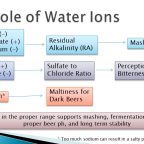 This week I provide an overview of water and its use in beer brewing. While water chemistry is considered by some to be an advanced topic, it makes up 90% of most beers and has a tremendous impact on your finished beer. Why Water Matters In blind tasting tests, changes to the water used in […]
  This week I take a look at some of the key process factors when lautering and sparging your all grain beer. Last week in part one, I discussed equipment design and how a filter bed forms around grain husks and creates channels that the wort flows through. I explained why a poorly designed lauter tun […]
 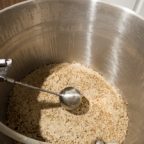 This week I take a look at the process of lautering or sparging your all grain beer. What appears to be a simple process actually has some interesting complexities to it. Lautering Lautering would appear to be one of the simplest steps in all grain brewing. Hot water is run through the grain bed to […]
 Jerry Franck, an Academy Award-nominated documentary filmmaker, followed a few notable lambic breweries to help sustain what many see as an anachronistic approach to beer making.
The post The Coolship Has Landed: Film Elevates the Art of Lambic Brewing appeared first on CraftBeer.com.
This week I take a closer look at the mashing process and what is actually going on when we mash malted barley and then sparge it to produce wort during the brewing process. The Purpose of Mashing Mashing is, in its most simple form, a process that breaks longer carbohydrate molecule chains into simpler sugars […]