pale

This week I take a look at one of Germany’s most popular beer styles, the light lager known as German Helles. Helles is a traditional German Lager produced primarily in Southern Germany (Bavaria) around Munich. The word “hell” in German can be roughly translated as “pale, light or bright” in English. The History of Helles […]
0 Comments

“Champion Brewery” has a nice ring to it, and that’s just what Beer52 — a United Kingdom based craft beer cultivation and subscription organization that serves thousands of international brews annually throughout the UK — has named The Virginia Beer Company. There is no secret that Williamsburg’s Virginia Beer Co. loves sharing beers & cheers […]

The post Virginia Beer Co. Receives Top International Recognition appeared first on CraftBeer.com.

0 Comments
Though not a recognized beer style, Golden Stout has been popularized by many craft breweries as a bit of a novelty beer. This week we take a look at how to brew one. What is a Golden Stout? A golden stout is technically a beer that tastes like a rich dark stout, but without the […]
0 Comments

272 medals awarded to 240 breweries in world’s most prestigious professional beer competition Boulder, Colo. • October 16, 2020 — The Brewers Association (BA) awarded 272 medals* to 240 breweries across the country during the 2020 Great American Beer Festival (GABF) competition awards ceremony. The best beers in 91 beer categories covering 170 different beer styles (including all subcategories) were awarded gold, silver, and bronze medals during a virtual ceremony hosted on The Brewing Network. Judges for the 34th edition of […]

The post Winners of 2020 Great American Beer Festival Competition Revealed During First-Ever Virtual Ceremony appeared first on CraftBeer.com.

0 Comments

Fall is in the air and that means one thing: harvest season! Brewing with fresh hops is a meticulous process, having to rely on bountiful bines and timing of wet hops plucked, packaged, and shipped overnight via air freight to align with a brew day built around the arrival of those hops and those hops alone…and this […]

The post Virginia Beer Co. Celebrates Harvest Season With Two Wet-Hopped Recipes appeared first on CraftBeer.com.
0 Comments
Any long-time readers may recall my interest in the original Russian Imperial Stouts – brewed in England with four malts (pale, amber, brown, and black) plus caramelized sugar. Fermented with English ale yeast and Brettanomyces. They bear about as much resemblance to modern pastry stouts as the original English-brewed IPAs do to today’s hazies and milkshakes.

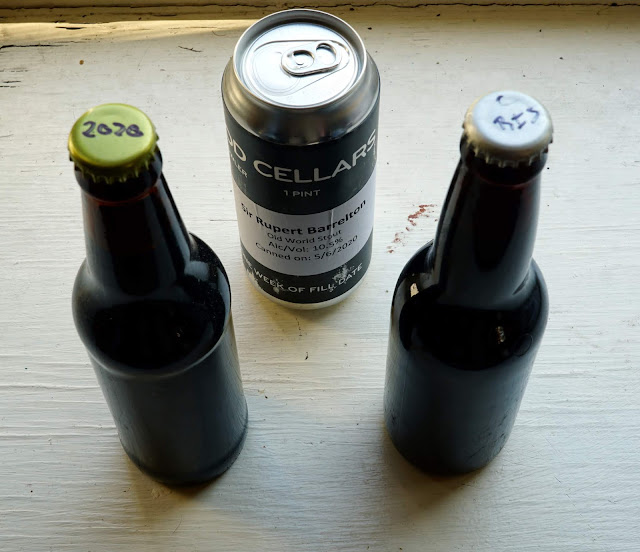
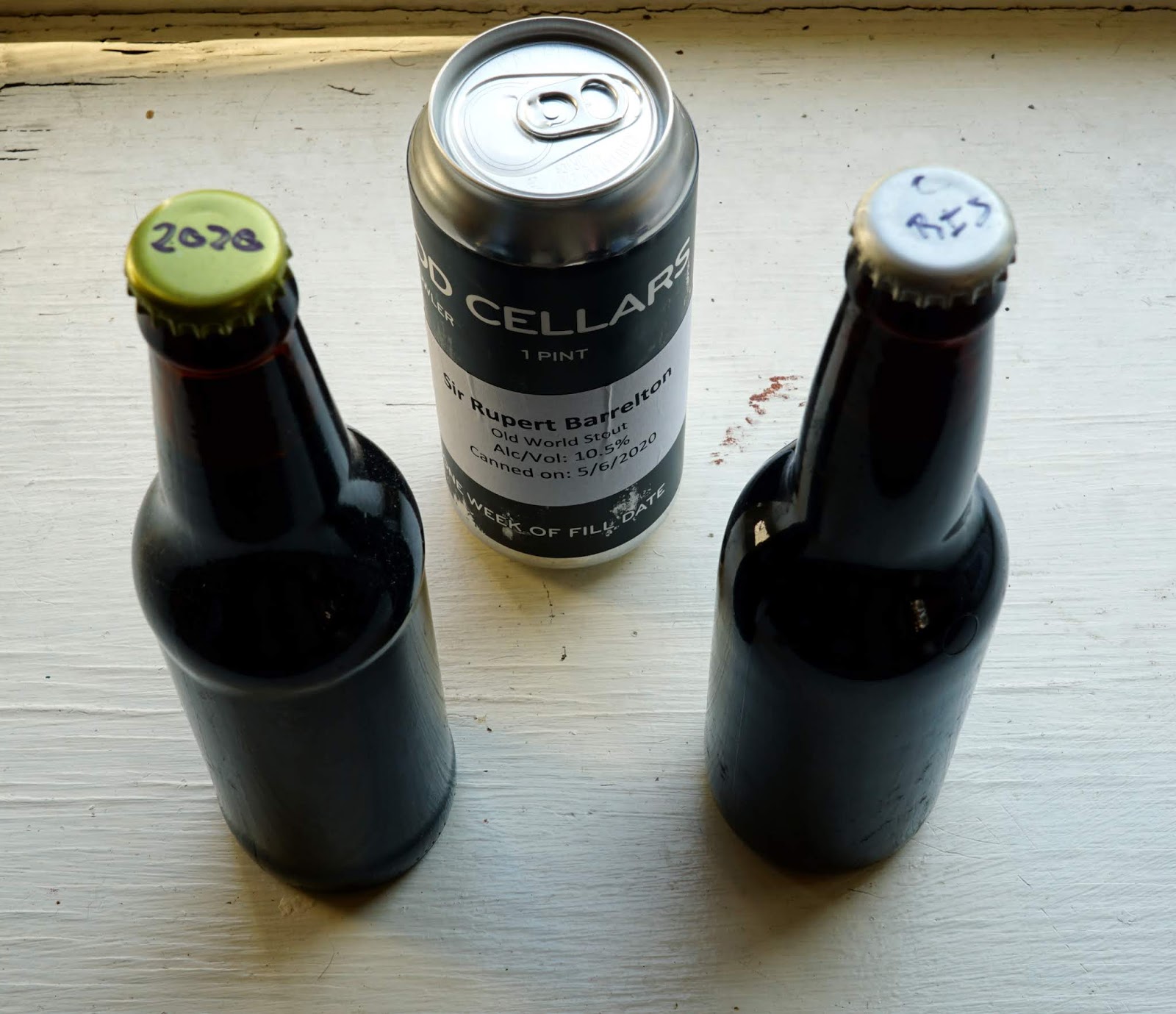
Of the many recipes from this blog that we’ve adapted to the big system at Sapwood Cellars (Atomic Apricot, Cherry Wine, Tmavé Pivo, Scottish Stout, Cheater Hops, Saphir Pilsner, Berliner etc.) my Courage RIS-Inspired is probably the one I was most excited about! We closely followed the original recipe from 2007 (which I preferred to the 2016 rebrew). Last summer we released the base beer (Lord Rupert Everton), followed last fall by Lord Rupert Barrelton which had a quick dip in barrels that held Cognac Finish Rye Whiskey from Sagamore Spirits.

After refilling the barrels from kegs of the same base beer, we pitched the same strain of Brett I used for the original, WY5110 Wyeast Brett anomalus. It's been out of production since 2007, but I asked everyone I could think of (starting with Wyeast) and no one had the strain available… French microbiologist Christophe Pinchon to the rescue! We’d already gotten “his” Willner Brett strain second hand for our gose (Salzig). The culture he sent started up quickly and I pitched half of an active 2L starter into each 80 gallon barrel in September… then not much happened. The Brett didn’t produce any CO2 or reduce the gravity over six months. Originally, we planned to bottle the beer once it stabilized, but without any apparent fermentation we decided we were better off kegging the beer as Sir Rupert Barrelton.


Sir Rupert Barrelton

Smell – Loamy, with fresher notes of Tootsie Roll (from the malt) and coconut/vanilla (from the barrel). I really have a hard time figuring out it that earthy note is Brett, or just mild oxidation from time warm in the barrels. The spirit-character is relatively subtle, but is enough to immediately make it clear this isn’t an authentic take.

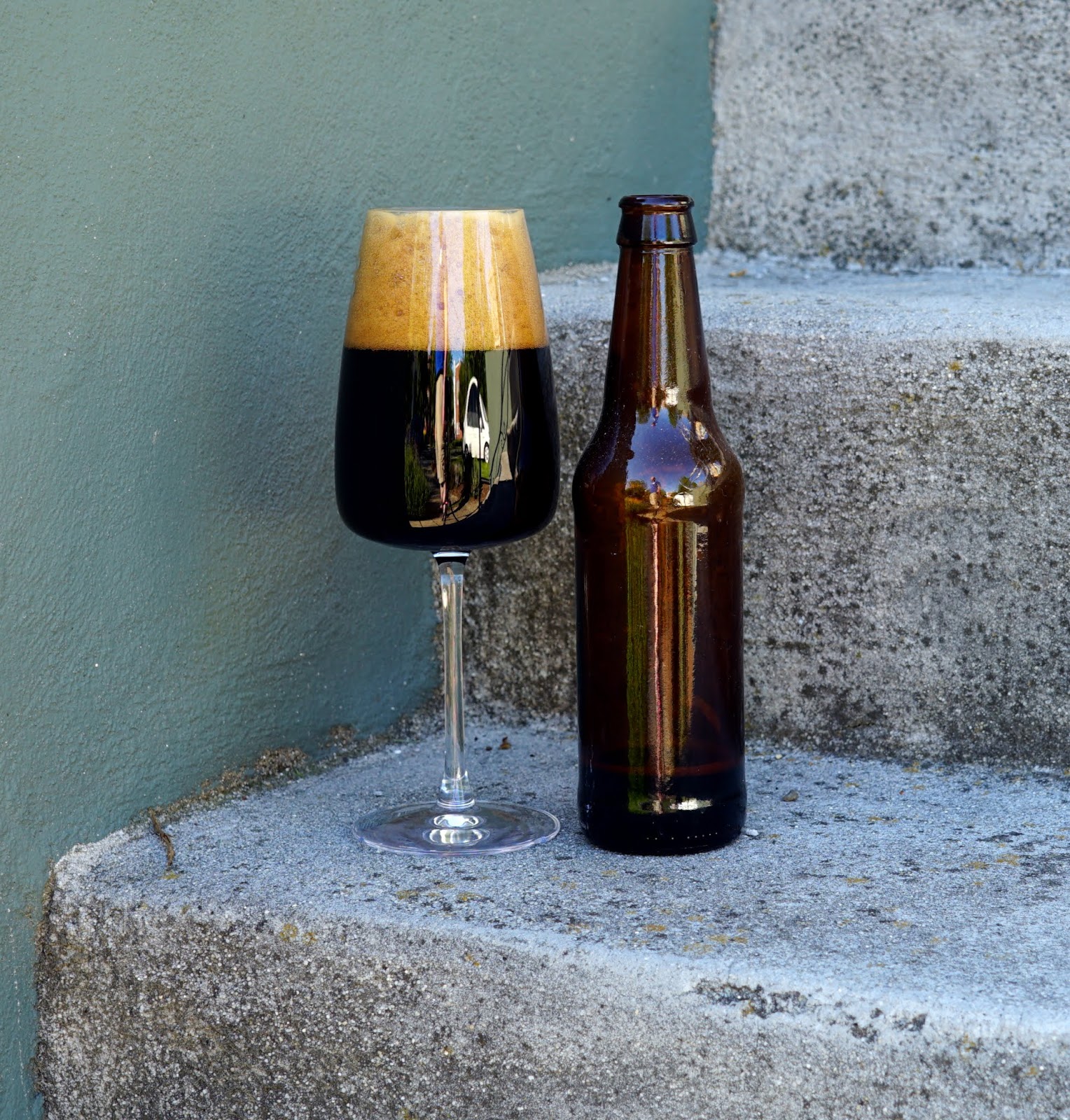
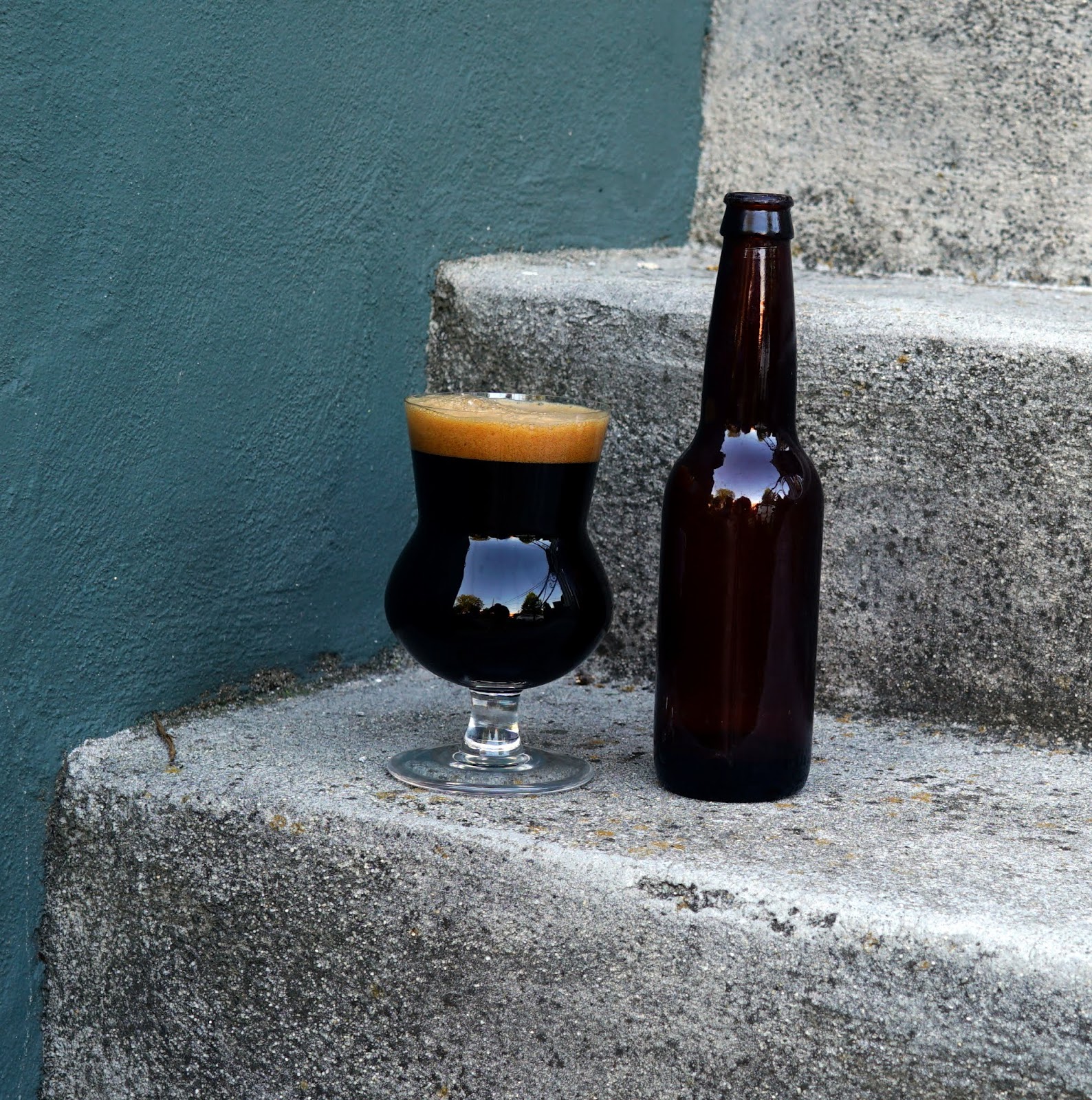
Appearance – Black with chestnut edges. Pretty good dark brown head. Solid retention.

Taste – Smooth flavor without any sharpness from the roast. The Maris Otter and Amber malt help to fill-in the background of the black malt. Plenty of baking soda prevents the roast-acidity that can cause stouts to become acrid. The dark candi syrup brings a subtle dark fruitiness without being obnoxiously raisin/plum like dark crystal can be.

Mouthfeel – Not as thick as stout drinkers are used to (I’ve seen some stouts finish above 1.080 now… and I used to think Dark Lord’s 1.060+ was absurd)! Low carb, just how I like by big/dark beers.

Drinkability & Notes – It’s a unique beer compared to the other more “modern” stouts we brew. The “reasonable” FG of 1.026 makes it easier to drink than the typically sweeter ones. I like the depth of the combination of barrel-character and malt. The age/Brett give it additional complexity. If you are in Maryland and want to try the beer we'll have it available in crowlers the next month or so.

Changes for Next Time – Maybe it was the alcoholic boost from the barrel that prevented the Brett from doing more? Better to use more neutral barrels, or stainless with oak barrel-alternatives. We refilled the barrels with a riff on my Big Funky Ale and pitched additional microbes. It would be fun to try making our own invert no.4 to replace the dark candi syrup.


Courage RIS Inspired 2016

Smell – Brett (cherry, funk, dusty). The Brett C really covers up the malt almost completely in the nose. Blind I suspect I’d lean towards calling it an Oud Bruin.

Appearance – Black with dark-brown edges. Big tan head that is held up by the carbonation for a few minutes before deflating.

Taste – Stout-ier than the nose, with some cocoa notes. However, the Brett is still the primary flavor. Some nutty (almost peanut brittle) flavors from the malts. Moderate bitterness.

Mouthfeel – Carb is similar to what I remember, higher than I’d prefer. A little thin, although once the carbonation is swirled-down it improves.

Drinkability & Notes – It’s a bit beer with a lot of funk, plenty of alcohol, and a bit too much carbonation, not exactly a beer I (or many) would drink quickly.


Courage RIS Inspired 2007

Smell – Oaky. Unlike Sir Rupert, it is the wood rather than spirit coming through. Not damp basement, and not Home Depot lumber aisle either. Just a pleasant vanilla-sugar cookie woodiness. A hint of licorice. The roasty-toasty malt is there, but is subtle. Like Sir Rupert the Brett is restrained, honestly makes me more confident that the Brett really did do “something” in the fresher beer.

Appearance – Black with chestnut highlights. Head pours small and drops quickly.

Taste – Every bit as good as it was 10 years ago. Cookie-toasty, vanilla-oaky, cocoa-roasty, and leather-earthy. It is relatively dry for a beer this big, but the bitterness is mostly gone too. I don’t get any wet paper, or any other signs of detrimental oxidation.

Mouthfeel – The body a bit thin, but considering I brewed it when I was 24 and I’m 37 now I can’t complain! A testament to my beginner's luck… and metabisulfite. Carbonation is low, but I wouldn’t mind if it was even lower.

Drinkability & Notes – What can I say about a beer I brewed more than 1/3 of my life ago? The other two are good beers that I enjoy, this one is something special. A huge range of flavors that all work in unison. Sadly this is my last bottle.


0 Comments
With our first anniversary (and party) coming up, I wanted to write a post on one of the many areas I didn't know anything about as a homebrewer that goes into an event like this. One of my many hats at Sapwood Cellars is compliance. It is a necessary part of the dream job, but luckily not the whole thing! It includes things like record keeping, filing excise taxes, and TTB submissions for formula and label approvals. The taxes took awhile to get used to, but aren't that bad now that we have adequate record keeping procedures in place.

We're lucky to be in that Maryland doesn't require federal COLA label approval for in-state distribution. So we're just now getting into that as we've recently been approved to sell beer in Virginia, DC, California, and Oregon. Don't get your hopes up, for now it's just small shipments for festivals and events (e.g., Modern Times Festival of Dankness, Aslin Anniversary Party, Snallygaster). So far it hasn't been too burdensome, mostly just getting the templates for our labels and keg collars in spec, and then learning what words are required or problematic. It is a bit more work given the wide variety of beers we produce (more than 150 in our first year), but most of those are tasting room only.


The more annoying piece is formula approvals (FONL). Despite what several brewers have told me, formula approvals are required any time you are adding ingredients not in the list of Exempt Ingredients and Processes regardless of whether label approval is required or where/if the beer will be distributed. I called the TTB and had my understanding confirmed. True, the odds of getting in trouble for not having an approved formula are low for a beer that stays in state (especially taproom only), but as a long-time government employee I'm just not an "ask for forgiveness" kind of person. The issue is that it seems approvals are really subjective/inconsistent.

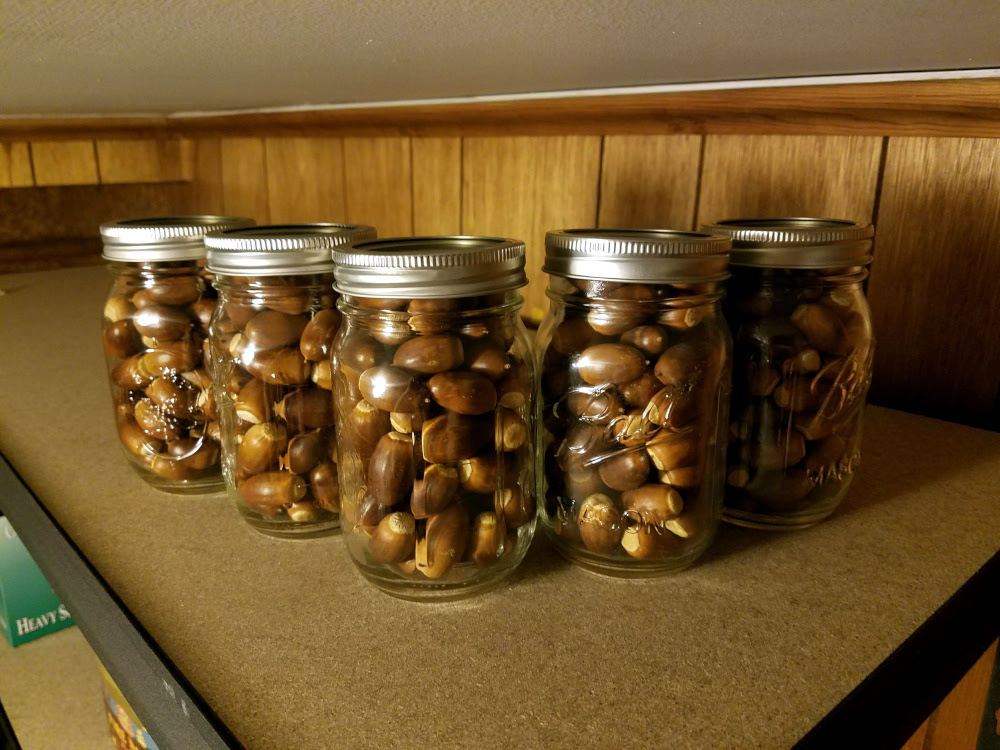
Last fall I'd requested a formula with acorns, to do a small batch with the acorns I dry-fermented. I was rejected. Well that isn't entirely true, what the TTB usual responds is to request the GRAS (Generally Regarded as Safe) notification from the FDA for the ingredient in question. The issue is that they know well that the most ingredients aren't on there, and that the only way to get it there would be to fund a study showing its safety. As a result, most of "GRAS" substances are specific chemical compounds (e.g., Xylooligosaccharides from sugarcane, Ergothionine, and Synthetic dihydrocapsiate) that large companies have gotten through. You know what isn't on there? Apples, while apple peel powder is. Oranges, but orange pomace and enzyme-treated orange pomace is. You get the idea.


When I contacted the FDA about acorns they responded that while acorns were not GRAS, I could use "tannic acid extracted from nutgalls or excrescences that form on the young twigs of Quercus infectoria Oliver and related species of Quercus." Pass...

Recently I saw another brewer mention that they had gotten acorn flour approved (but were still requires submission of a "tannin leaching" process). I submitted a formula for a dark saison with acorn flour, and was rejected again, but this time for the reason that acorn flour is approved without a request being required. Not sure what grinding the acorns up does to change it from requiring FDA study to being allowed without even having to submit a formula request.

Something similar happened with Staghorn Sumac (which I'd used at home with wonderful results). GRAS notification was requested from my submission, which annoyed me because I've had several commercial beers brewed with. I responded:

Maybe I am misunderstanding the GRAS Notices? It doesn't seem to include most of the typical ingredients added to beer, e.g., hops or barley. Most of the entries are for chemical compounds or specific extractions from plants, not fruits, vegetables, or other commonly consumed foodstuffs? Rhus typhina (staghorn sumac) has been made into a lemonade-like drink for centuries. Here is an info sheet from North Dakota State on the species, that includes: "Food - Sumac lemonade made from berries."

Three weeks later and my formula was approved without further comment...

I've got nothing against safety rules on what goes into beer. I'd just prefer they were clearly delineated and widely followed.

Since both of these ingredients are foraged and thlimited, we decided to make 15 gallon variants with each for the anniversary party. A barrel-aged dark saison (based on Funky Dark #4) for the acorns and a pale sour fermented with The Yeast Bay Melange for the Sumac!


0 Comments
Whether you are a homebrewer or a craft brewer, things don't always go as expected or something breaks. If you aren't ready, it could cost you a batch or delay a brew. In the worst case scenario a company can go out of business, making a replacement part difficult and expensive to procure. More than once we haven't had a (seemingly) small inexpensive thing and it caused issues. Learn from us (and chime in with your own suggestions)!

Yeast

If you use liquid cultures, there is always a chance that your starter won't start or your brink will run dry. We always keep a couple bricks of dried yeast on hand. On a commercial scale, SafAle is ridiculously inexpensive ($50-75 for 500 g). We always have a brick of US-05 and S-04 in the cooler. The strains you keep will depend on what strains you use. If nothing else, we'll use them for primary fermentation on sour beers when we don't have enough liquid yeast harvested.

Being friendly with a few other local brewers could be handy as well, but there usually isn't a guarantee they'll have yeast to spare at the last minute.

Yeast/beer fridge.

Fermentables

I find it helpful to have both dextrose and maltodextrin on hand. We had a DIPA dry out a few points too far, easy enough to boil a pot of maltodextrin, keg it and shoot it into the brite tank to add .004/1P. Dextrose is handy if your gravity is lower by a few points, although in most cases we'll just leave the beer alone. Dried pale malt extract is another option, especially if your efficiency is inconsistent (or you often brew really strong beers).

It never hurts to order a few extra bags of a favorite malts either, especially for things like Golden Naked Oats that often seem to be out of stock. Extra base malt is nice too, especially early on when you're ordering ingredients for a few batches and still feeling out system efficiency.

Sacks of dextrose and maltodextrin.

Hops

Buying on the spot market means sometimes you get a bag that isn't all it should be. Better to have a few back-up options to swap in for dry hopping. Mediocre hops are usually fine in the boil, so if we open a bag of Simcoe that is so-so, we'll open another and save the first for a boil/whirlpool addition.

Fittings/Gaskets

We try to have at least one "extra" gasket in each size. This is especially true for things like manways that aren't generic. Unluckily we didn't think of this before the gasket on our 15 bbl DME fermentor stretched out... now they're out of business and we're still working to find a replacement. The one we have still works, but likely won't forever. If we order anything new, we get replacement seals and parts for it at the same time.

Same goes for having extra valves and other fittings that might leak or stop working. Delicate instruments like hydrometers, thermometers, refractometers never hurt to have redundancy either.

Gaskets of various shapes and sizes.

Controllers

Nothing is worse that electronics that don't want to work properly. Our MidCo burner for the kettle has a small control board that shorts if a few drops of water fall onto it. The first time was a complete surprise after washing down the kettle, but we ordered two replacements. That saved a batch of beer a few months later after a boil-over (our new gas meter really increased the heat output). No problems since adding a water-proof cover...

I've been meaning to buy a few extra solinoids for the glycol/tanks too as they are notorious for going bad.

Our MidCo burner.

Enzymes

When our most recent batch of saison stalled out we were ready for it, we added amyloglucosidase and the gravity dropped quickly to 1.001. There are other enzymes that you might consider as well that help with conversion, run-off, and clarity as well.

Enzyme

Gasses

While we have a bulk CO2 tank, we also have a few smaller tanks. They're necessary to pour at events, but they're also nice to have if the bulk tank runs empty and we need to keep pouring beer! Same story with nitrogen. We have two tanks so we have one in use and one filled (or waiting to be swapped).

20 lb CO2 cylinder compared to 750 lb bulk tank.

Your Suggestions

Rather than waiting for more things to go wrong to learn what else we should have, post a comment and let me know what to buy!

0 Comments
The excitement over hazy/NE IPA is the best thing that has happened for local breweries in a long time. They are expensive to brew, difficult to package, a nightmare to distribute long distances, and get beer drinkers excited! When we put a juicy Double IPA on tap it flies. Our recent 7-barrel-yield of Snip Snap lasted less than three days, while an IPA might last three weeks, and a pale ale five. Having a beer that draws increases growler sales, and helps sell all of our other beers as people end up trying other similar beers when they come in.

Snip Snap DIPA

Here is a graph of the scores of 13 of our hoppy beers (pale ales, IPAs, and DIPAs) showing the Untappd score compared to the ABV. The formula for the trend line is y = 3.2008+.1392*x. That suggests if we brewed a 0% ABV hoppy beer it would score a 3.20 and to get a score of 5 would require 14.31% ABV. The R-squared value of the correlation is .71, so the most important factor in the consumer's opinion of our hoppy beers is strength (granted that typically comes with a higher dry hopping rate, sweetness etc.).

Impact of ABV vs. Untappd Score.

Driving business to your tasting room is job #1 for a small brewery because that is where the profit is highest. When you buy a beer at a bar or restaurant, most of the money goes to them rather than the brewery. While a ½ bbl keg of a pale ale might sell to a bar for $150-175 (a portion of which might go to a distributor), at even $5 pint the bar makes $620 in revenue. At our scale, it is almost impossible to make a profit only  selling beer at wholesale. It requires a tight reign on expenses with a premium price point, not to mention low overhead.

It is no coincidence that local brewery booms seem to follow when a state or city allows production breweries to serve/retail their own beer. In the case of Maryland this has created backlash from distributors, and a lesser extent bars and liquor stores who see more consumers cutting them out.

Sapwood Cellars Holiday Party

Ingredient Cost

We aren’t doing a great job controlling ingredient costs. We don’t reuse our yeast nearly as much as we "should" (3-4 batches per pitch), we pay as much as $35/lb for hops that are difficult to get on the spot market, we buy our malt pre-milled by the bag, we use expensive “real” ingredients for our variants (and usually don’t up-charge over the base beers) etc. That said, having a tasting room that is busy covers all of those sins.

Great Western Full Pint Malt

10 bbls – Pillowfort
$484 – 2-row
$137 – Malted Oats
$40 – Chit Malt
$50 – Milling Fee
$11 – Glucose
$.80 - Whirlfloc
$.06 - Zinc Sulfate Heptahydrate
$1 – Calcium Chloride
$1 – Gypsum
$.25 – Epsom Salt
$2.00 – 350 ml 75% Phosphoric Acid
$125 – Liquid yeast
$150 – Dry yeast
$77 – Columbus
$99 – Centennial
$396 – Citra
$264 – Azacca
~$100 – CO2/Gas/Electric/Chemicals
 ($1950/batch - $1.11/pour)

Let’s say we put more effort into yeast management and that gives us confidence to reuse the yeast for 20 batches. Bringing the proportional cost down from $125 to $25 per batch. The net savings to us would be $.05 per pour. What if we moved to a silo for 2-row, and cut our base malt cost down to a third and added a mill? $.14 per pour. That would make Pillowfort ~$.92/pour. Granted these recurring costs add up over the course of a year and both might yield improvements to the consistency and quality of our beer. But selling just one 1/2 bbl keg to a bar, even charging $250, loses us more money per batch then we’d save from making those moves. It also speaks to how important yield on these heavily dry-hopped beers is.

Most of our IPAs and DIPAs work out to $100-150 per ½ bbl keg. Self-distributing these beers for $200-250 there would be no way to make enough to cover rent, pay ourselves, and fund expansion. However, being a retailer of our own beers means we get $800-900 for that same keg sold by the glass and growler. It makes sense for us to charge a reasonable price ($7-8 for a 14 oz pour in a 17 oz glass) and have consumers return rather than charge a dollar or two more and end up having to self-distribute kegs (with the added effort).

When we do send kegs out, we try to get as much of a push out of it as we can (fests, tap-takeovers, beer dinners etc.). We don't pay for any traditional advertising, but we view the "losses" from self-distributing as a form of marketing. That also means not always sending beer to the same bars, as we want people to feel like they have to come to us to try our beers regularly.

Beer Festival

Most bars use a flat percentage markup to price their draft. If a beer costs twice as much for them to purchase, they’ll charge twice as much to the consumer. That means that they’ll make a much larger dollar-per-ounce profit on more expensive beers. The same isn’t true at most breweries, an IPA with Nelson Sauvin or Galaxy is easily twice as expensive as a session wheat beer (especially considering the lower yield with high dry-hop rates), but we don’t double the price. Still, charging $7 for IPA and $6 for the session wheat makes the IPA more profitable per pour. When you visit a brewery and buy beer, you’re allowing them to spend more money on the ingredients and make better beer. Not to mention that the brewery will care more about their beer and have better control over the product.

Overhead

After ingredient cost, our next biggest expense is rent. Scott and I debated where to open and toured spaces with a wide range of looks and costs. While a beautiful rustic plot with room for outdoor events and a small orchard was appealing… either running on a septic or paying hundreds of thousands of dollars for a municipal sewer connection was not. Conversely, opening in a vibrant downtown with plenty of foot traffic would have meant easier retail sales, but would have tripled our rent. Brewing is a space-intensive manufacturing business (especially with barrel aging), it is difficult for me to justify paying $30+ sq ft for the parts of the business that aren’t customer facing.

Lease Signing Day

If we are able to brew enough to outstrip tasting room demand, we’ll look into opening a small taproom someplace other than an industrial park. For the time being, our location is close enough to residential for the tasting room and inexpensive enough for 4,000 sq ft of production. Luckily the power of Google Maps, Untappd, and social media has been enough for us to draw people in.

In addition to the ability to sell beer by the glass, a tasting room opens up the way for merchandise sales, private events, packaged beer, and even food sales (working on that now). It has been essential for us to have a space and offerings that attract customers, even those who aren’t beer nerds. A fantastic staff, and enough of them working for short waits also improves the customer experience.

Salaries are the third big expense. Scott and I have done 100% of the brewing, tank cleaning, kegging, and keg washing up to this point. Financially speaking, our labor has been free, but we certainly could have kept our day jobs and paid less-per hour than our lost wages to hire brewers and cellar-people. That said, it didn’t seem right to trust something we’d worked so hard for to other people. As I learned from consulting, the people who are physically there have the biggest effect on the results. We’ll be looking to hire someone in the brewhouse soon, but we’re still trying to figure out what the role will be (cleaning and cellar duties, or someone who already has the skill-set to be a lead brewer eventually). We were willing to pay for front-of-house, as that is where we didn’t have experience (or the time to learn).

Other Income Streams

I posted about Brewery Clubs a few months ago. As a brewery that didn’t take on outside loans or investors, the extra money we brought in from club sales was essential. It gave us the breathing room to buy more expensive equipment, ingredients, not to mentions barrels for beers we won’t sell for months or years, and dump most of a batch that we didn’t love. Padding in the bank account helped with our sleep those first couple months too.

We’re now “paying” some of that money back. We made it through the club holiday events, for which we created 16 sixtels of variants that we didn’t sell a drop of. Not to mention paid employees to work (and at $15 an hour as tipping was light without tabs). Most of that cost was in our time, but we’ll continue to incur costs as we give bottles, decanter baskets (below), and events that club members paid for last year. Not only do we want to ensure that customers (and many friends) are happy they joined, we’d like to over-deliver so many consider re-upping for 2020!

Decanter Baskets

The rest of this year our biggest focus will be on packaging. Direct sales of canned and bottled beer should give us the chance to increase total revenue, but it will also lower our per-ounce revenue. While many people are willing to pay $8 for a 14 oz pour of DIPA... $5 for a 16 oz can of the same DIPA is about the top of the market. Cans have higher costs associated with them as well, both in terms of labor and materials (especially when you don't own a canning line). That really slims down the margins, and will dictate which beers are more likely to be canned (e.g., Pillowfort with Azacca rather than Snip Snap with Galaxy). The most important thing for us will be avoiding turning draft sales into can sales. Ideally cans are an add-on to tabs or an additional trip for a release rather than a replacement for draft consumption and growlers.

Shared Kingdom at Black Flag

What makes sense for a brewery will depend on the types of beer they brew and their goals as a company. If you want to be a large production brewery, it may make sense to start fighting for draft accounts early. We don’t have any resources dedicated to outside sales, in fact we turn down most offers to put our beer on tap. We’d rather have an excess of demand, and be in strong position rather than fight for a limited number of tap handles with an ever-increasing number of breweries.

Having the huge catalog of homebrew recipes between the two of us has been a big advantage too. On Saturday we tapped a scaled-up version of Atomic Apricot. The price difference on the apricot puree was particularly stark, $1.71 per pound at the commercial scale vs. $7.84 for the same product (Oregon Fruit/Vintners Harvest). I haven't been doing much homebrewing or test batch brewing so most of my social media posting has moved to the Sapwood Cellars Facebook and Twitter accounts (Scott does Instagram because I usually avoid posting from my phone).

0 Comments
Brewing beer at home changed the course of my life. At first it was merely a fun way to explore my drink of choice, and an excuse to hang out with friends. As time passed it became a larger part of my life, a side-hustle, a reason to travel, altered who I am. I always hated public speaking… until I figured out that I’m engaging when I care about the material. I was never passionate about reading, researching, and writing, until they meant I could learn to brew better beer and share my passion. I met many of my friends at homebrew club meetings, through this blog, and homebrewing forums. I worked a boring government desk job for 12 years, until brewing allowed me to open a business!


That’s why I'm sad that homebrewing is on the decline in America. I see it at DC Homebrewer’s meetings, where there aren’t nearly as many fresh faces as there were five years ago. The closures of retailers, like the recent announcement from Love2Brew. The surveys from the American Homebrewer’s Association gives hard numbers: from 1.2 million homebrewers in 2013, to 1.1 million in 2017.

Anecdotally over the last 30 years, American homebrewing has experienced three similar dips. Roughly the early-1990s, early-2000s, and the last few years. These coincide with three pivotal moments in commercial beer availability.

By the early 1990s most parts of the country had a selection of bottled craft beer from the likes of Sierra Nevada, Boston Beer, not to mention a few local breweries. No longer were beer drinkers limited to macro lagers and stale impotrs, because hoppy pale ales, malty browns, and roasty stouts were available coast-to-coast. I've met a few former homebrewers who thought that was enough selection to make homebrewing superfluous. There were still plenty of people who wanted to drink a wider range of styles though, and that still meant brewing their own.


A decade later with the opening and expansion of breweries like Allagash, Dogfish Head, New Belgium and hundreds more, the selection and availability of craft beer had exploded. You could find wit, kolsch, imperial stouts, apricot pale, IPA and a multitude more everywhere. Most cities had stores where you could pick from hundreds if not thousands of bottles. Again, some homebrewers didn’t see the need to keep brewing when they could drink a solid example of pretty much any style. Still though, many homebrewers wanted greater variety, unique flavors, and ua-fresh beer.


Now we’re in another slide. With more than 6,000 breweries spread across the country, most Americans can take a short drive to visit a different brewery tasting rooms every week for a few months without repeating. Not only that, but the old model of four core beers, four seasonals, and a couple special releases is  gone. Many breweries are producing 50 or more beers each year. The variety is staggering, and again many former homebrewers are happy to reduce their risk/effort and sample as many new beers as they desire. Not only is homebrewing suffering, but so are many of the breweries from those previous waves… Smuttynose, Green Flash etc.


In the chart below, the red line represents Google searches for "Brewery" the blue is "Homebrewing." December 2008 is the closest they have been (29 to 13), while July 2018 was the furthest (100 to 5). That's to say that while search interest in breweries has more than tripled over the last ten years, during the same time interest in homebrewing has dropped in half.


Where does homebrewing go from here?

There have always been different types of homebrewers, different reasons they brew. There will always be homebrewers. Those who brew not to save money, or drink the “best” beer, but who love the process. Those who are passionate about recipe design, microbiology, botany, community. engineering, culinary techniques, and experimentation. For them craft beer is a source of inspiration, but not a replacement for the hobby!

I don't view automated homebrewing systems as a threat to traditional homebrewing or a big boon for the hobby. If I hear one more new product that bills itself as the “Keurig” of beer… I’m going to lose it! It isn’t even like Keurig is synonymous with high quality coffee. I just don’t see any product that makes brewing that easy gaining a strong foothold because brewing beer involves more care than coffee and to-the-minute freshness isn't as important. You can buy a six pack at the store for less than it takes to brew these, and enjoy a bottle each night. The automated systems will always make beer that isn't as good as commercial, at a higher price-point. Not that automated wort production isn't appealing (and useful) for homebrewers looking to devote less time to the process.

If this time is like the previous two lulls, homebrewing is due for another bounce. Maybe the continual push for novelty in craft brewing, extra-bold flavors, and lack of true originality turns people off. Lack of quality, high prices, poor quality control, beer that sits too long before being sold… honestly now that I know how good IPA tastes within a month of brewing, I rarely buy a six-pack off the shelf. Hopefully as more consumers become accustomed to really fresh beer at tasting rooms, they get interested in brewing it for themselves! Maybe the greater number of people drinking craft beer simply gets more people interested in brewing.

The second option is decline. As quality beer becomes more accessible the price will be pushed down, making it an even more attractive option for marginal-homebrewers. Homebrewing becomes an even more specialized/nerdy hobby, and we lose out on the vibrancy that new hobbyists bring.

My best guess is that we're reaching stasis. There won't be a return the levels of excitement and engagement we saw ten years ago. There will still be plenty of people who drink craft beer, and try their hand at homebrewing, but only enough to replace all of the homebrewers who stop to drink craft beer or join the industry.

Homebrewing Matters

Drinking beer wouldn't have done the same thing for my life as homebrewing. An active engagement with brewing is the best way to really understand and appreciate beer. It caused me to learn and grow in areas that aren't really connected to beer or brewing. I understand that drinking a beer and checking in on Untappd is no-risk (I wrote a couple hundred reviews on BeerAdvocate), but it doesn't really lead to anything. Drinking beer is a diversion, brewing beer can change your life!


0 Comments
My homebrewing frequency has taken a nosedive recently (surprise), but I still try to find time to brew a weird batch when I can. In August, when Scott and I drove to pick-up our first hop order in western Maryland, I noticed that Staghorn Sumac was in full bloom along I-270 . I’d read about flavoring beer with it in The Homebrewer’s Almanac, but never actually tasted a beer brewed with it. Sumac is tart and fruity, traditionally used in a tart lemonade-like beverage.

Staghorn Sumac "Berries"

I pulled over and harvested about a pound. The range I’d read was 1-5 lbs per 5 gallon batch. Without a beer ready for them, I took the clusters of dusty berries off of the central twig, vacuum sealed them, and froze. That was enough of an excuse to brew a batch of Berliner weisse (fermented with US-05 and Omega Lacto Blend - similar otherwise to this recipe). After primary fermentation I racked 1 gallon onto the resulting .75 lbs of sumac, and another onto .5 oz of dried Turkish sumac from Penzeys for a month. Obviously if the dried version is just as good, it certainly would be easier!

Me, harvesting sumac


Dried Turkish Sumac Berliner

Smell – Aroma is light, doughy-grain, lightly citrus and roasted pear. An odd note of cinnamon as well.

Appearance – Clear pale yellow. It’s almost so pale that yellow isn’t the right word, it looks washed out, faded. Retention isn’t great, but the tight, white head sticks around for much longer than the other half of the batch.

Taste – Bright acid without being obnoxious. The finish has an odd fall-spice note as in the nose that I suspect is from the sumac. Dry without being a desert.

Mouthfeel – Classic Berliner, light and spritzy.

Drinkability & Notes – The not-entirely-pleasant musty-herbal flavor the dried sumac provided when the beer was young seems to have mostly faded to a light spiciness. I’m not sure I’d even pick it out if I didn’t know it was in there.

Changes for Next Time – Maybe a different/fresher source of dried sumac would provide a better flavor and aroma?

Staghorn Sumac Berliner

Smell – Aroma has the generic fruitiness of Hawaiian Punch, or Hi-C, but with an herbal hint of a Ricola cough drop. I don’t get any of the base beer, at this elevated rate it is all sumac. Certainly in the same sort of flavor-family as hibiscus.

Appearance – To go along with the aroma, it has the color of Hawaiian Punch. Similar head retention too…

Taste – The same fruit flavor from the nose, but more pronounced cherry candy. It’s a really fun flavor, that doesn’t stray into cloying. Acidity is snappy, sort of Vitamin-C, quick and punchy. No sweetness, finally breaks the comparison to "fruit" beverages.

Mouthfeel – Light, medium+ carbonation, but not excessively thin or harsh.

Drinkability & Notes – Staghorn sumac is a foraged ingredient that has a real chance for broader appeal. The flavor is fun, quenching, and somewhat familiar. The color certainly doesn’t hurt either. With how much it took, a mild base beer like this makes the most sense.

Changes for Next Time – I was sort of hoping this one wouldn’t be delicious so that I didn’t have to source a couple hundred pounds to put into a beer next summer. Likely could drop down closer to .5 lbs/gallon for a more balanced beer, but it is delicious as is!


I’m hopeful I can get this formula approved by the TTB for Sapwood, as there are already a few commercial beers from the likes Sumac Sour from Four Quarters, Backroads from Suarez Family, and of course several sours and saisons from Scratch. That said, it seems like they are clamping down as I had both acorns and Eastern Red Cedar rejected already. I’ve had several brewers tell me that the step isn’t necessary unless you are getting label approval (not true) or that it is better to ask forgiveness than permission…

I'll be making the trip down to Asheville, NC March 22-23 for another round of BYO Boot Camps! As usual I'll be talking about Wood/Barrels one day and Sour Beers the other. I said it before, but this really is looking like the last one of these for me given how much time running a brewery takes!
0 Comments