The market is responding to the growing demand for flavorful, well crafted non-alcohol beer.
The post The NA Way: The Rise of Non-Alcohol Beer appeared first on CraftBeer.com.
The market is responding to the growing demand for flavorful, well crafted non-alcohol beer.
The post The NA Way: The Rise of Non-Alcohol Beer appeared first on CraftBeer.com.
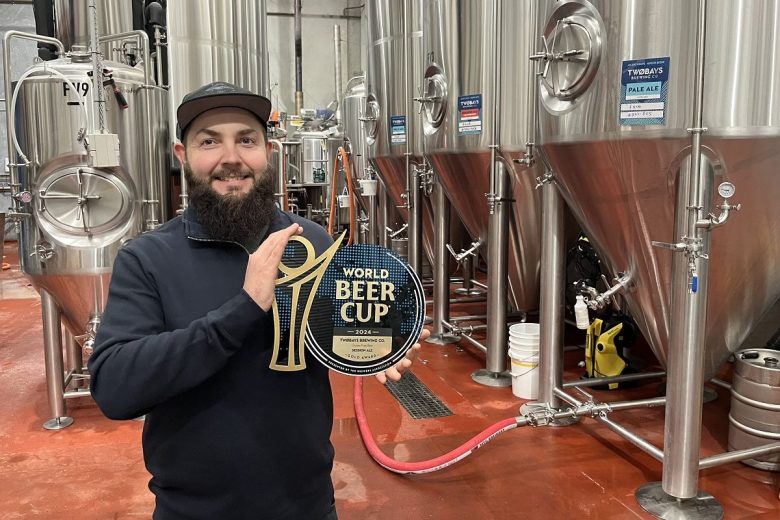 This week’s brewer spotlight highlights Kristian Martin, Head Brewer at dedicated gluten-free brewery Two Bays Brewing Co.
 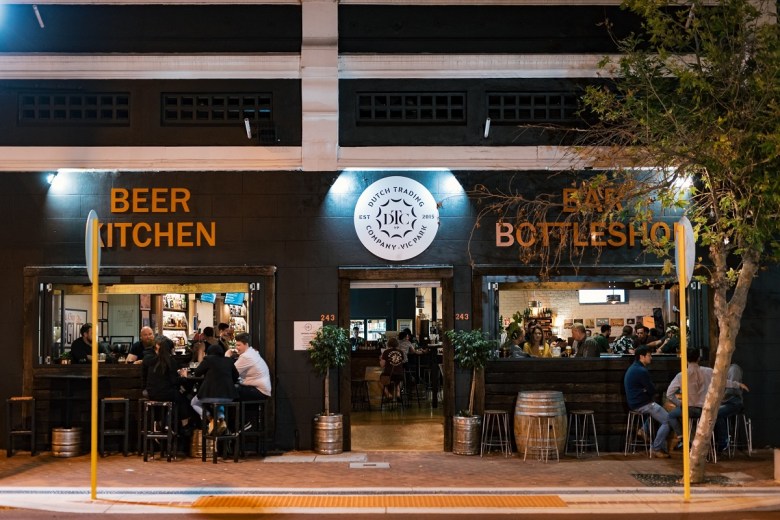 After nine years as a craft beer hub for WA, Dutch Trading Co. is closing, with the owners planning to transform the venue into something new.
  From Irish stout to hazy pale ales, Beer & Brewer rounds up the best non-alcoholic beers for Dry July.
 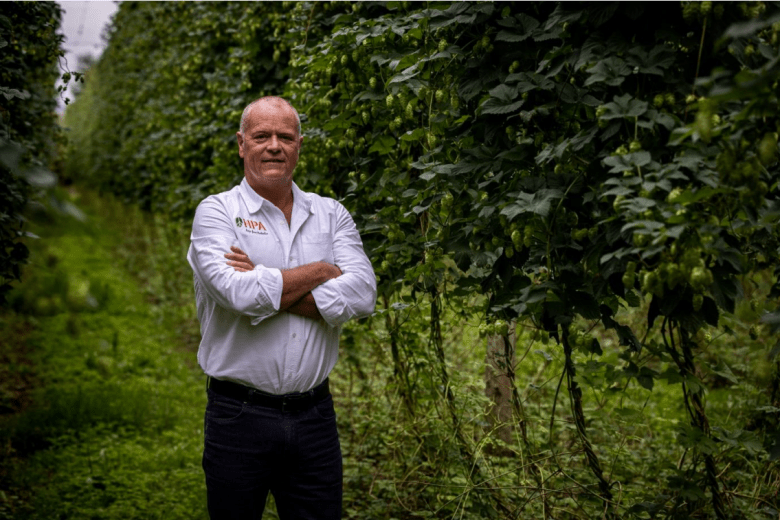 Tim Lord leaves behind a 19-year tenure at Hop Products Australia, in which he significantly transformed the business.
 Regardless of customs, environs, or condiments, beer is there to make a burger better.
The post Meat & Malt: Beer Makes Burgers Better appeared first on CraftBeer.com.
 Australian Beer Co’s Emma Walton shares lessons and highlights from 20 years of brewing experience across the UK and Australia.
 These movers and shakers are not only brewing top-notch beer, but are also making game-changing steps toward a craft beer industry that welcomes all.
The post Pride in Their Craft: LGBTQIA+ Brewers Build Community appeared first on CraftBeer.com.
Outer Range Brewing Co. is renowned for its IPAs and outdoor spirit. It was no surprise when its founders decided to open another brewery—but choosing to do it in the French Alps made quite the impression.
The post French Twist: Colorado’s Outer Range Opens Outpost in Alps appeared first on CraftBeer.com.
 White Bay Brewery’s Extra Pale Lager is a unique style that stands out from the crowd of craft beer as being something different. It is a style that isn’t yet very common in the beer market and we believe there is demand for it.
 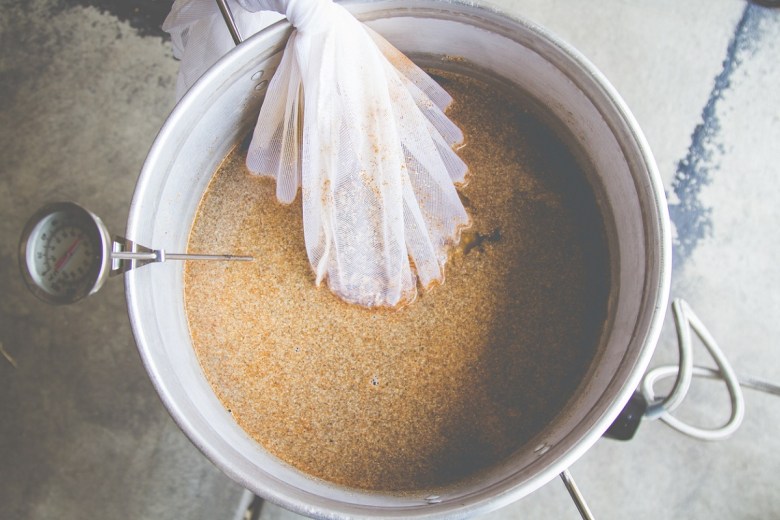 The two-stage competition will allow finalist homebrewers to collaborate with commercial breweries on their competition brew.
  This week I take a look at sanitizers to use for beer brewing. In part 1 I presented an introduction to cleaning and sanitation and the importance of separately cleaning and sanitizing. Part 2 featured the most common cleaners used for beer brewing and their strengths and weaknesses. Sanitizing Sanitizing is the process of reducing […]
 While I love the pure expression of malt, water, hops, microbes, barrel, and time... fruit can make a fantastic addition to a barrel-aged sour. From a "sales" standpoint it is also easier to explain the difference between beers with fruit, than those with subtle differences in grain bill or microbes. Most people know they like cherries, plums, and raspberries... they may not know they enjoy horse blanket, minerality, or rubbery notes.
This is the third in a series of posts updating my thoughts from American Sour Beers ten years ago. The two beers featured below (Jammiest Bit and Fruit of Many Uses) were both part of the first shipment of the Sapwood Cellars Out of State Shipping Club. Memberships for that shipment are closed, but you can still sign-up now for the next shipment fall 2024 ($146/shipment including shipping). Bottles of both are still available at the tasting room!

I would almost always rather use fresh in-season local fruit over a puree, juice, freeze-dried, concentrate, and especially natural extract. Local produce tastes unique, meaning a beer that doesn't taste the same as one brewed on the other side of the country or by a larger brewery. You'll get a more complex character from having beer in contact with the stems, skins, pits etc. Working with farms, orchards, and vineyards "fits" the narrative of an artisanal product... making it look good on social media too! Not to mention our fruiting tanks (without conical and glycol jackets) work best with whole fruit rather than purees.

Talking directly to farms and orchards at farmer's markets is a great place to start. Tasting things, chatting about what sort of capacity (and excess) they might have. Sometimes you can get a good deal on seconds... but for me these often aren't worth it since it can take a lot of time and effort to sort them (going rotten before they are all ripe) and cut-out mold etc.

We've used IQF (Individual Quick Frozen) fruits several times with great results. For smaller batches I've just gone to supermarkets, found a product I like the flavor of... and bought out a couple locations. Online specialty purveyors like Northwest Wild Foods have weird things you might not find locally, like honeyberries. For lager batches we've ordered from Coloma Frozen Foods, but don't do it regularly as refrigerated shipping is expensive. Recently we've been getting our raspberries from Twin Springs Fruit Farm (which freezes their own). Using high-quality frozen fruit is something great lambic breweries do, and it allows to extend the fruiting season so you don't have to have enough tanks for all of your fruit beer at once!

That said, not all fruits are available locally. You can certainly source whole fruits from a good local produce supplier (and we have), but purees have their place too... especially in "smoothie" type sour beers. That said, there is no magic bullet on sourcing them. We've used Oregon Fruit, Greenwood Associates, Kerr/Ingredion, Asceptic Fruit Purees, Hop Havoc, Boiron, FruitGuild, and Araza. None of them are "always good" and none of them are always bad. It's often about preference. For example, Oregon Pineapple is thin, closer to juice, great for an IPA where you'll drop out the solids. Araza Pineapple is much thicker, perfect for a smoothie sour. Both taste great.

Frozen wine grapes are another great option, either juice or must. Again, I love working with local vineyards (Crow Vineyard and Winery has been especially nice to work with), but that isn't always an option! We've had good luck with Grapes for Wine and Wine Grapes Direct.

The only concentrates I've enjoyed are "freeze" concentrates (the wild blueberry and raspberry from Greenwood Associates are great). I've disliked the flavor of all of the standard high-concentration "boiled" concentrates which end up tasting like caramel, and are so thick that they are difficult to mix with beer. Granted, after an early batch with concentrates from Kerr we really haven't tried any more. On the other hand, Kerr's NFC (Not From Concentrate) raspberry juice was terrific, so I suspect the issue was the concentration.
Freeze-dried fruit can be a pretty good option for tropical fruits like mango. I've yet to find a mango puree that didn't taste cooked. The freeze-dried stuff tends to have a brighter "mango popsicle" flavor. It can be pricy, but there is a lot of flavor pound-for-pound. North Bay Trading generally seems to have the best bulk pricing.

We have a chest freezer at the brewery so we can keg fruit when it is ready, but not necessarily have to go onto it immediately. Freezing the fruit also helps break the cell walls allowing better/quicker contact and refermentation. Just make sure to line your freezer with cardboard so the bags don't stick to the interior. That's all we do for berries. Freeze them, let them thaw in the tank, then transfer beer on the next day.
When it comes to larger fruits (e.g., stone fruit like peaches and nectarines) we'll manually quarter them and discard the seeds/pits. In an ideal world we'd selectively process and freeze the fruit on a flow basis as it reached peak ripeness.
I've never had good luck with fermented citrus, so for limes, lemons, oranges, and grapefruit we use the zest. We use a Starfrit Electric Rotato Express. It struggles a bit on really large grapefruits, and we go through a couple a year as they just aren't sturdy enough for a "production" environment.

There is some science that cherry stems have glycosides that Brett can work on to free fruity aromatics... but in practice I find they add a "stemmy" flavor that reminds me of dried leaves. I like the pits though. Obviously nice to find a source that has your preferred processing so you don't have to do it!
However you process the fruit, purge the tank with CO2 thoroughly before transferring beer in. This will help ensure the brightest, freshest, fruit expression possible!

We usually repitch rehydrated (with StartUp/GoFerm) wine yeast along with the fruit to ensure a rapid refermentation, scavenge oxygen, and enhance the fruit character. While our sour beer production area has "light" HVAC, we don't have jackets for our fruiting totes (Flextanks). As a result, we'll change our yeast depending on the seasonal temperature. Usually using more heat-tolerant red wine strains in the summer, and cool-loving whites in the winter.
We also add a small amount (5-7 PPM) of hop extract to prevent additional acidification if the beer is already sour enough for our tastes. See my article on hopping sours for more details.

I've slowly come to be an advocate for relatively short contact time, enough to ferment out the sugars, but not much more. This is especially true of raspberries (which develop a "seedy" flavor from extended contact). I've also heard strawberries as a quick-contact to reduce the phenolic "plastic" flavor they can develop. Although I've also read that can be varietal specific, and others claim freeze-drying can help mitigate.
If I'm aging a beer on raspberries and another fruit that I prefer longer contact, I'll do that separately in two totes. That way we can keg off the raspberry after 10-14 days, while the cherries, wine grapes etc. have a little more contact time (1-2 months). They we blend them together. This could also be accomplished sequentially by racking the beer off of the raspberries and then onto the cherries.

Our Flextanks have stainless steel filters from Utah Biodiesel Supply fitted over the racking arms with stoppers. A false bottom would likely work even better, but with a slow transfer we haven't had many issues with whole/pieces of fruit. The lone one I remember causing havoc with chunks of frozen mango that totally disintegrated.
With all the time and effort of getting the fruit and processing it, we often try to get a second beer out of it. Second use fruit is more subtle, allowing a more "beer-forward" balance. You could likely get similar results from ~25% of the fruiting rate, but second use fruit is easier (and free)!

We'll often just push in a single keg of sour beer onto the fruit from a whole batch to "rinse" it. This gets a big fruit character and it's an easy way to make a unique one-off
We'll do a whole new batch onto especially high fruiting rate beers. For example when we did 4 lbs/gal of raspberries in Throwing Hearts with Other Half, we went onto the fruit with a sour red along with vanilla beans to make Galactic Swirl.


For Fruit of Many Uses, we racked the beer sequentially into each tote after a previous beer. Getting Chardonnay grapes (from Field Learning, our Bissell Brothers collab) before going into barrel, followed by raspberries, then cherries (both from Jammiest Bit), and white nectarines (Polite Company).
We haven't tried it, but I know some brewers who will knock-out fresh wort onto spent fruit as a way to get fruit flavor along with a strong house culture.
No matter your technique, be extra mindful of limiting oxygen exposure as you won't have refermentation to scavenge oxygen.
Barrel #71 Golden Strong #3 (Pils, 2-row, Chit, Wheat malt, and Flaked Wheat to 1.056 with aged Celia and Lemondrop pellets). Primary fermentation with 58W3 and some microbes from a blend of older barrels that was primarily Yeast Bay Mélange (but also various dregs from Oxbow, Jester King, and Backacre). Then aged 17 months in a second-use Malbec barrel. The culture in the barrel itself was originally derived from a De Garde bottle.
Barrel #36 Marylambic #7 (Weyermann Barke Pilsner, Flaked Wheat, and Chit to 1.044 with .5 lbs/bbl aged East Kent Goldings). Primary fermentation T58. Then aged 13 months in a third-use Pinot Noir barrel. The microbes in the oak were originally from dregs from two Floodlands bottles.
Racked into two totes one with 150 lbs Twin Springs Raspberries and the other with 150 Baugher's Orchard Sour Cherries. Both frozen and thawed. Each received 10 g of HopSteiner Alpha Extract, and fresh 71B for refermentation.

Smell - Mix of fresh berries, raspberries more than cherries. Not a hugely complex funky or "Brett-forward" beer, but there is a little lemon and hay Barrel character is hidden behind the fruit as well.
Appearance - Crystal clear, brilliant red-purple. Light-pink head fizzles quickly, but stays as a thin covering.
Taste - Cherries come through more on the palate. Good fruit intensity, still really fresh/vibrant. Firm acidity, slight sharpness from the malic acid of the cherries? Again not an especially complex or funky beer, but it’s a showcase for good fruit. The Baugher's cherries without stems seems to have been a good choice. A bit sweet which lends a more Flemish Red lean rather than Lambic or Saison.
Mouthfeel - Medium-high carbonation. Medium-light body.
Drinkability - It grows on me as I drink it and my palate gets used to the acidity. Good blend of fruit, bright flavor, I just wish the base beer was a little more interesting.
Changes for Next Time - Wouldn’t mind depitted cherries to make sure we are getting good extraction.
Base Beer: Belgian Pale #3
78% Murphy & Rude Virginia Pilsner
18% Murphy & Rude Wheat Malt
4% Murphy & Rude Vienna Malt
OG 1.047
.5 lbs/bbl 5-year-old Australian Summer Hop Pellets
Primary Yeast Lalvin 71-B
Microbes from Chardonnay Grape tote (originally a Bissell Brothers house souring culture they sent for the collab).
Then aged in a third-use Cabernet Sauvignon (microbes originally from Modern Times House of Sand) and Barrel #41 fourth-use merlot barrel for 11 months (microbes in barrel included East Coast Yeast Senne Valley, Bokkereyder dregs, Mad Fermentationist Saison, Casey, and Afterthought dregs)
Racked sequentially onto 150 lbs Twin Springs Raspberries, 150 Baugher's Orchard Sour Cherries, and 250 Twin Springs White Jade Nectarines.

Smell - The berry leads, more cherry than raspberry. Earthy hay, candied fruit salad. The nectarines and grapes don’t shine in the aroma, but they help to send it in a direction that isn’t one-note “berry.” Almost apricot brandy as it warms. I don’t taste anything off from the pits, seeds etc.
Appearance - Carbonation seems a little low. A hard pour results in only a two-finger white head. A few bubbles rising through the pale body. Good clarity.
Taste - Pleasantly tart lemony acidity, without being harsh. The nectarine comes through more distinctly on the palate. Finish is berry again, but light, bright, and juicy finish. Non bitterness.
Mouthfeel - Medium carbonation, could be spritzier. Smooth, no astringency. Light body, without being thin.
Drinkability - Really complex with the different fruit notes coming in and out of awareness.
Changes for Next Time - The Chardonnay is mostly lost, would be a better feature in a plain beer or maybe light dry hopping.
A new wave of Asian American brewers is putting their heritage at the heart of their craft.
The post Redefining Craft Beer: Asian Americans Brewing Up Heritage appeared first on CraftBeer.com.
A fun way to explore a new destination is through its local beverage scene, and many areas are making this experience even easier with the creation of beverage trails.
The post Mixed Drinks: The Lure of Beverage Trails appeared first on CraftBeer.com.
 To the delight of many, Chuck Hahn has come out of retirement to start a brewery with his son, Scott.
  The Victorian brewery is closing its doors after eight weeks of administration, ending the brewery’s 12 year history.
 To be a part of the craft beer scene in New Orleans is to be a part of the city’s vibrant culture of culinary delights, thoughtful drinks, deeply rooted music traditions, and an emphasis on socializing within the community.
The post Beer in a Cocktail Town: How Craft Breweries Have Enriched NOLA appeared first on CraftBeer.com.
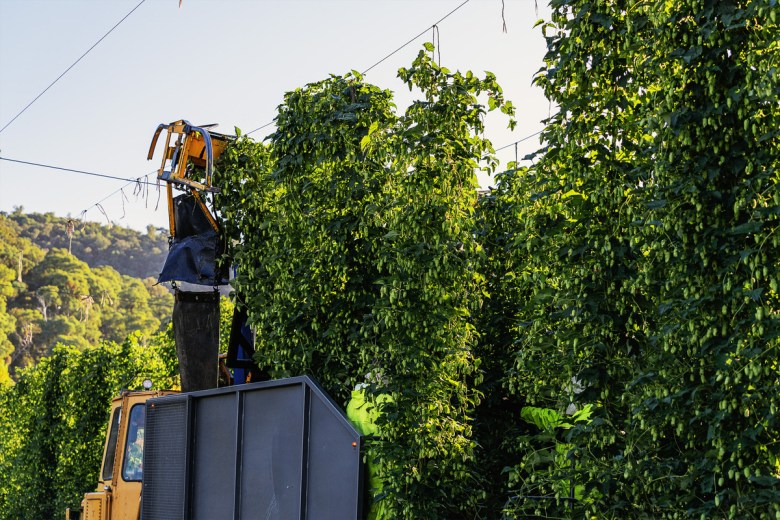 Weather conditions led to reduced hop yields across the board, but high alpha and oil levels indicate a promising crop.
 This is the second in a series of posts each covering an aspect of brewing mixed-fermentation barrel-aged beers where my opinions have changed significantly since I wrote American Sour Beers 10 years ago. Each post will focus on our process, recipe, and results for one of the beers in the Sapwood Cellars Shipping Club (includes 6 bottles, for $146, cancel anytime) - sign-ups for the first box close May 5th! This post covers blending through the lens of Growth Rings 2023 (our blend of 1-, 2-, and 3-year barrel-aged sours). If you are closer to the brewery, May 10th and 11th I'll be doing a talk and vintage sour tasting including pours of Growth Rings 2021 and 2023!
As a homebrewer, my experience with blending was limited to a handful of batches. Over the last six years I've had a hand in blending more than 70 batches of barrel-aged sour beer. So, I thought it would be valuable to give my thoughts on the process, what I've learned to do, and not to do.

You can't blend great beer if you don't have options. Creating variety starts on brew day and continues through fermentation and aging.
Malt Bills - More so for darker sours, it's good to have options for beers that have different flavors to pull from. Even for pale beers, having different grains (wheat, oats, rye, spelt, light caramel malt etc.), and starting gravities can be valuable for creating range.
Hopping Rates - As I discussed in my previous post, hopping rate plays a large role in acidity and "funky" aromatics. Bitterness itself can be a valuable flavor in a blend, it's a flavor present in most lambics, and too often missing from American sours.
Acidity - Having "Brett only" barrels is a good way to ensure you have beer available that won't be too acidic. When a barrel starts getting too sour, we'll often keg it so it is available for blending at a low level for beers that aren't sour enough.
Barrels - A blend of "new" and well-used barrels. Early on all of our barrels were first-use (to us). As a result many of our early releases were too woody, giving "lumber aisle" vibes. Most sour beers are light and delicate and too much oak can overwhelm. At the same time, it's good to retire barrels that aren't producing spectacular beer allowing you to bring in new characterful barrels (we currently have fresh gin, Madeira, PX Sherry etc. aging). If I was starting a new barrel program, I'd soak half of the barrels slated for pale beers with multiple changes of hot water to leach out oak flavor and tannins before filling.
Microbes - It is easiest if you have the same culture in all of the beers/barrels. In that case you don't have to worry about additional attenuation after packaging. For me, it's more valuable to have a variety of microbes for different acid levels and Brett profiles for more dynamic flavor options. As time has gone on we've split the difference, pumping in some of a favorite barrel to a fresh batch, but then going into various barrels with their own cultures. We'll also pitch additional microbes if a barrel isn't headed in a good direction at 6-12 months.
Ages - It can be helpful to have the same/similar beers of various ages so you can balance flavors. We've gotten better at judging which barrels just need more time, and which are headed in a bad direction and need to be dumped. That said, I don't have as much time to taste/monitor the barrels as I should and I still "miss" some good barrels leaving them in too long until they taste oxidized or off.

Think about the goals before you start. What is the concept? What other ingredients are you adding after blending? What is the target volume? Sometimes it is good to just taste barrels for inspiration, but that can be overwhelming when you have dozens of barrels to select from. I try to set a general schedule before the year starts. It keeps me on track for seasonal ingredients, sourcing barrels for finishing, and utilizing our staff/tank time rather than bunching up releases. I tend to earmark barrels as "potential" candidates for a blend, ideally twice as many barrels as a blend would require.
From there, I go to our barrel-spreadsheet (more info). I filter for beers with enough age, appropriate bases, removing barrels that are already earmarked for other projects. Lots of releases overlap, say I fill five barrels with sour red and hope to get a two-barrel blend plain and a two-barrel blend with fruit. Hopefully I have an "orphan" barrel that was passed over from last year or another similar base that didn't fit in its blend available for variety. Then I start pulling nails and tasting to gauge my options. I note barrels that need more time and those that are running out of time. Hopefully that narrows down my choices to five barrels at most for a two or three barrel blend.
Then I pull larger samples of those barrels so I have enough beer for a few blends without having to go back and pull more. When possible, I try to create full-barrel blends, although we occasionally keg-off partial barrels for future blending stock. In the same way if a blend is missing a little something, I'll take a look through our kegs and see if there is an option that satisfies the need.
I usually break down my options by acidity. If two barrels are a bit too acidic and two are not acidic enough, I'll try blending my favorite from each camp together to see where that gets me. Then swap in the other if there is something that doesn't work. Once I get a solid blend, I might go hunting for a little something extra. For example we were just blending a sour red, and ended up with a little 3+ year-aged Vin de Cereale (strong sour red) as a low-percentage malt-booster bringing perceived sweetness and more oak.
In terms of the practicalities of blending, I usually use volume. Weight works, but I tend not to worry about extreme precision because the volume in each barrel can differ by 5-10% anyway. For each blend I start with an empty cup to avoid issues with tracking when you take a sip, dose in more and then don't really know the ratio.
Finally, I write down the winning blend. When possible, I come back and taste the blend on a fresh palate later, ideally with someone who wasn't involved in the initial blend (since that is how the majority of people drinking the beer will approach it).

Blending takes time and practice, but one thing that has been immensely helpful is blending with other people. Some of my favorite collabs are sensory rather than recipe-based. There isn't often much I get out of brewing a collab beer, instead we invite in other brewers to taste through our barrels and help select a blend, brainstorm adjuncts etc. Sam, Tim, and co. from Other Half helped blend Throwing Hearts. Jennings from Pen Druid came in to blend Life is Ridiculous. Mike Thorpe from Afterthought visited last week to blend an upcoming beer with hardy kiwi and New Zealand hops. We've done similar things on the stout side with Mike Saboe from Toppling Goliath and Eric Padilla from More/Open Outcry. Heck it's just great bringing in homebrew friends with good palates to help taste barrels, bounce ideas off... and just give me an excuse to pull samples!
Barrel #16
Beer: Golden Sour (Pils, 2-row, Chit, Wheat Malt, .5 lbs/bbl Aged Hops, 1.056)
Age: 16 Months
Barrel: 5th-fill Pinot Noir American Oak
Culture East Coast Yeast Flemish Ale
Notes: Rubbery funk, medium acid, bright, good
Barrel #19
Beer: Rings of Light (2-row, Chit, Malted Wheat, Unmalted Oats, 40 IBUs in Whirlpool, 1.062)
Age: 8 months
Barrel: 4th-fill Chardonnay American Oak.
Culture: Omega Brett C and Yeast Bay Amalgamation
Notes: Less acidic, funky, bright fruit, rubbery
Barrel #20
Beer: Marylandbic (Pils, Unmalted Wheat, Chit, .5 lbs/bbl 2014 Celeia pellets, 1.045)
Age: 35 months.
Barrel: 2nd-fill Chardonnay American Oak.
Culture: Omega Brett C and Yeast Bay Amalgamation (plus a house culture that was a repitch of a repitch in primary)
Notes: Loamy, a touch stale, bright lactic acid.
Barrel #62
Beer: Belgian Pale (Pilsner, Wheat Malt, Vienna, 15 IBUs Sterling First Wort, 1.048)
Age: 27 months
Barrel: 2nd-fill Cabernet Franc French Oak
Culture: SARA Saison Bernice
Notes: Sprite, tart, but not highly acidic.
Growth Rings is the rare bottle-conditioned sour that we didn't repitch with wine yeast, a good choice if you're looking to harvest bottle dregs!

(My personal notes from a few months ago)
Smell - Citrusy nose, apricot, hay, bright and fresh. Missing that big rubber that is present in most great lambics.
Appearance - Pale gold, clear, lots of bubbles, thick head, good retention. Great lacing.
Taste - Delicate acidity. Lemon, apricot, just a touch of rubber.
Mouthfeel - Snappy carbonation, medium-light body. Lighter bodied than a classic Gueuze.
Drinkability - In terms of drinkability, it’s my favorite recently. Lively, complex… but it isn't as gueuze-y.
Changes for Next Time - It has sort of a barrel-aged saison quality more than gueuze. Maybe that fresher whirlpool hop character from Rings of Light… that said I really like the result.

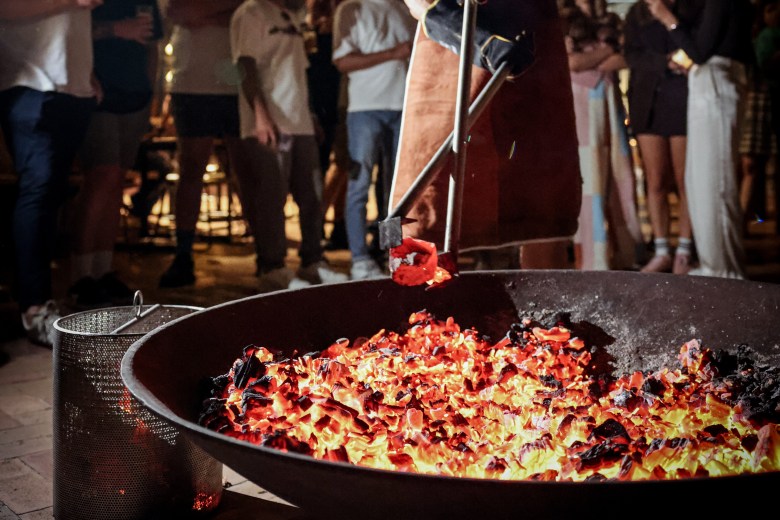 The annual event honours ancient stone brewing traditions while crafting the limited-release Stone Beer.
 In craft brewery taprooms, water can play a role in creating the sense of belonging and safety intrinsic to building hospitable community spaces.
The post Freely Given: Water as a Hospitality Tool in Craft Beer Spaces appeared first on CraftBeer.com.
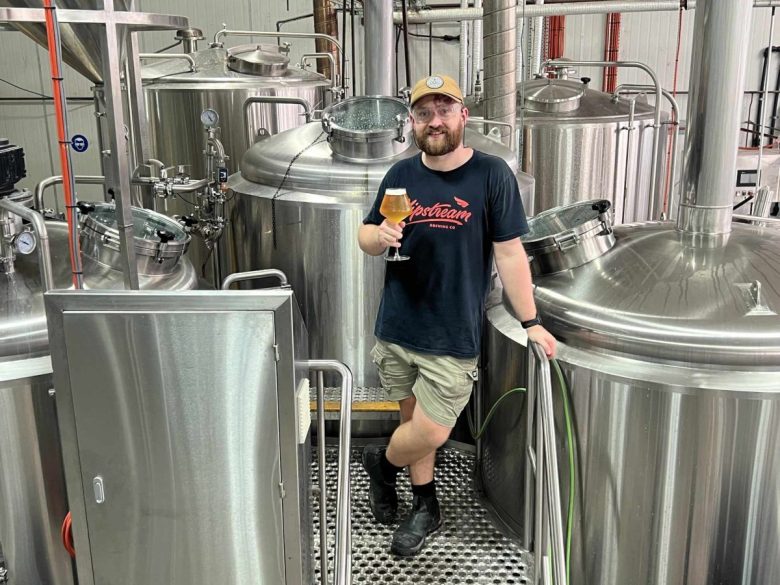 2024 Queensland Royal Emerging Queensland Brewer Daniel Thomsen on his dedication to learning and his work at Slipstream Brewing.
  Kerrie Abba and Johnny Latta have put Nomad Brewing Co up for sale just shy of the Northern Beaches brewery's 10th anniversary.
 My book, American Sour Beers, is turning ten next month! I wrote it from the perspective (and experience) of a homebrewer. I wanted to experiment and learn. I really didn't know much about brewing commercially, creating consistent blends, adapting recipes as a barrel program matured, developing flavors that would sell etc. Looking back I have to ask, did my book help launch 1,000 barrel programs, without providing the knowledge brewers actually needed to succeed?

Over the last decade American craft brewing had an explosion of breweries ramping up barrel-aged sour production, followed by a pretty rapid decline (including multiple mid-sized breweries closing their programs and sour-focused breweries closing). Part of that is the inherently less-predictable nature of mixed-fermentation (when you order a cherry sour beer, what are you expecting? Kriek, cherry juice, cherry vinegar etc.). Compare that to a bourbon-barrel vanilla-bean stout where you have a pretty good idea of what the intent was. I suspect at least part of it was the oversaturation of the market combined with the high prices.
Despite brewing my first sour beer in 2006, becoming a brewery consultant in 2011, writing a book in 2014, and opening a brewery in 2018... I haven't been consistently happy with the barrel-aged mixed-fermentations I made until the last couple years. I certainly never released a beer that I thought was bad, but there were certainly had batches that were too sour, muddled, under/over carbonated, or just didn't "pop." During that time we've also released some amazing beers that I still love!
At Sapwood Cellars we've relied on our local club members, and the people who walk in the door to buy ~10,000 bottles of barrel-aged sour beer a year. That may sound like a lot, but it's less than 5% of our production (and we're a pretty small brewery). There really hasn't been much interest in barrel-aged sour bottles in our limited distribution range. They tend to be beers that sell best when you can explain them directly to the drinker, rather than just have them sitting on a shelf! If only there was a way I could talk directly to beer drinkers interested in sour beer...
The first installment of the club is $146 (including shipping) for one 500 mL bottle each of six beers:
Growth Rings 2023: Three-year-blend of barrel-aged Sours, essentially our cuvee of bases, barrels, and microbes showing off our house character. This one isn't refermented with wine yeast, so the dregs would be a good option if you are looking for microbes! It was the second highest-rated "Gueuze" on Untappd in 2023!

Barrels of Rings: Our pale ale base, mixed-fermented in wine barrels and then dry hopped right before bottling. Citrusy-funky with restrained acidity.

Jammiest Bit: Our homage to Hommage, a barrel-aged sour on loads of sour pie cherries and red raspberries. Fruity, funky, tart etc.

Botanicia: A blend of pale sours aged in gin barrels that we then infused with dried limes and quinine. A weird play on a gin-and-tonic... but with a lot more acidity and funk!

Elliptical Orbit 2023: A continuation of the "Dark Funky Saison" series still with my original collaborator and homebrew buddy Alex. For this one he roasted Geisha coffee beans and we infused the barrel-aged dark sour with Geisha cascara (dried coffee cherries).

Fruit of Many Uses: We sequentially racked the same barrel-aged tart/funky base onto second-use Chardonnay wine grapes, cherries, raspberries, and white nectarines. All of the fruit was whole/local.

Over the next couple weeks I'll be posting my detailed tasting notes on each of the beers, along with recipes, lessons learned, and suggestions for brewing something similar at home! I'll repeat for each club release, assuming enough people sign-up for the club to make it viable.
Over the last five years it isn't "one simple trick" we learned that improved our beer. It's the accumulation of 100 little things from ingredient selection, to blending, to process refinement, to equipment that we've figured out. It's sitting down with each beer, drinking, thinking, taking detailed notes, and iterating. So much of it is not doing it by myself, having Scott, Ken, and Spencer to push to do things I wouldn't have (Botanica was Ken's baby, and Barrels of Rings was Scott's). Both are delicious, and they are certainly beers I would not have brewed if it was all up to me!


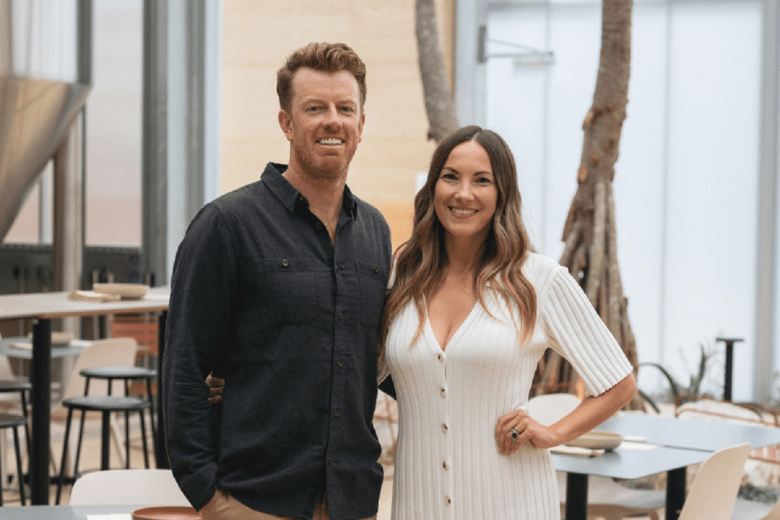 Ahead of Modus Brewing’s 10th anniversary celebration this weekend, we chat with Co-Founder Grant Wearin about his highlights from the past decade.
 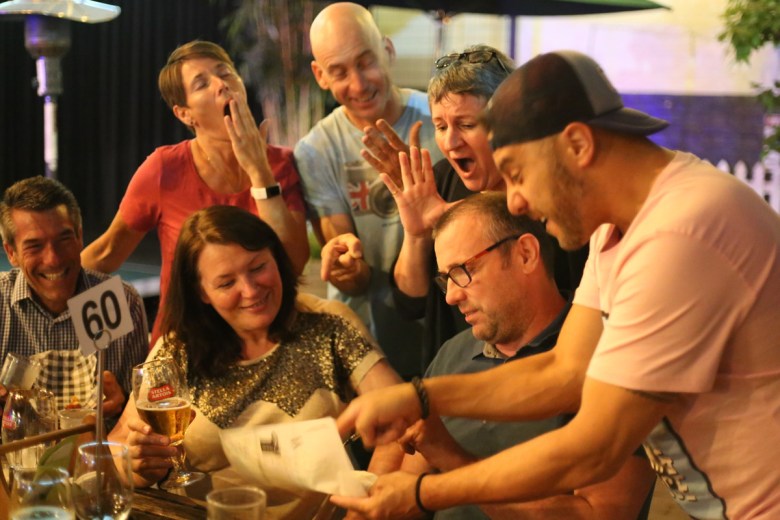 Beer & Brewer spoke to breweries about the benefits of patron engagement events and how to host the right events for your brewery or taproom.
 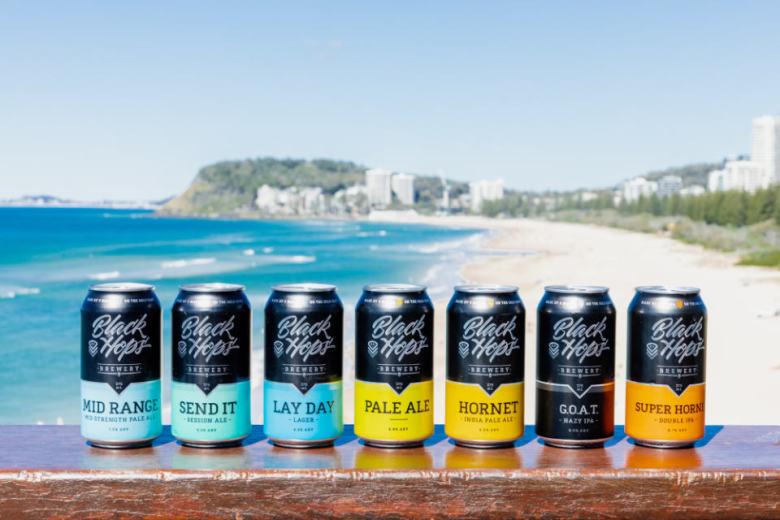 The brewery is pursuing financial restructuring as a result of its current circumstances.
 Some brewers are finding unexpected flavors growing right outside their doors, from mushrooms to pine tips.
The post Foraging For Beer’s Wildest Ingredients appeared first on CraftBeer.com.
 A popular Sydney brewery teams up with a clothing brand, a sour highlights native fruit from the Kimberly, and a 20-year anniversary release.