white

Hops get all the attention—all the fame, puns and glory while yeast does almost all the work. Hops dominate label space, and varieties like Cascade, Strata and Citra are practically house-hold names, thanks to the seemingly unquenchable demand for every category of IPA. Yet basic beer ale yeast Saccharomyces cerevisiae is abstract to most people, […]

The post Yeast, A Romance Story appeared first on CraftBeer.com.

0 Comments

Seven Latino men gathered on a Hacienda Heights driveway on a warm Southern California night. Shiny homebrewing equipment filled the garage so the fledgling craft brewers stood in the car port—pint glasses in hand—sharing names, hometowns and brewing experiences. The SoCal Cerveceros homebrew club was born. “We didn’t really know what it was going to […]

The post SoCal Cerveceros, America’s Largest Latino-Based Homebrew Club, Is Making Its Mark appeared first on CraftBeer.com.

0 Comments
This week I wanted to share a more detailed look at the upcoming Web based version of BeerSmith which is scheduled for release in June of 2021. It will be available to all Gold+ license holders of BeerSmith 3. When released, you can simply log into your existing BeerSmithRecipes.com account and edit recipes in your […]
0 Comments
This week I take a look at one of Germany’s most popular beer styles, the light lager known as German Helles. Helles is a traditional German Lager produced primarily in Southern Germany (Bavaria) around Munich. The word “hell” in German can be roughly translated as “pale, light or bright” in English. The History of Helles […]
0 Comments

Many in the world of craft beer seek out the artisans of coffee who show the same amount of love to coffee that craft brewers pay to craft beer. As these brewers develop a love and appreciation for craft roasters, some brewers have found ways to utilize a roaster’s skill and attention to detail to elevate the brewery and its offerings.

The post The More Fulfilling Cup: Craft Brewers and Craft Roasters Find Common Threads Together appeared first on CraftBeer.com.

0 Comments

The #1 winter seasonal beer1 returns with a crisper and brighter recipe and festive inspiration for holidays spent at home BOSTON, MA, Nov. 9, 2020—Samuel Adams brewers recognize the winter season will feel different this year, with many Americans taking “home for the holidays” literally. To spread some holiday cheer when drinkers need it most, […]

The post Samuel Adams’ New Winter Lager Brings A Wintery Remix To Holiday Classics appeared first on CraftBeer.com.

0 Comments
My homebrewing frequency has taken a nosedive recently (surprise), but I still try to find time to brew a weird batch when I can. In August, when Scott and I drove to pick-up our first hop order in western Maryland, I noticed that Staghorn Sumac was in full bloom along I-270 . I’d read about flavoring beer with it in The Homebrewer’s Almanac, but never actually tasted a beer brewed with it. Sumac is tart and fruity, traditionally used in a tart lemonade-like beverage.

Staghorn Sumac "Berries"

I pulled over and harvested about a pound. The range I’d read was 1-5 lbs per 5 gallon batch. Without a beer ready for them, I took the clusters of dusty berries off of the central twig, vacuum sealed them, and froze. That was enough of an excuse to brew a batch of Berliner weisse (fermented with US-05 and Omega Lacto Blend - similar otherwise to this recipe). After primary fermentation I racked 1 gallon onto the resulting .75 lbs of sumac, and another onto .5 oz of dried Turkish sumac from Penzeys for a month. Obviously if the dried version is just as good, it certainly would be easier!

Me, harvesting sumac


Dried Turkish Sumac Berliner

Smell – Aroma is light, doughy-grain, lightly citrus and roasted pear. An odd note of cinnamon as well.

Appearance – Clear pale yellow. It’s almost so pale that yellow isn’t the right word, it looks washed out, faded. Retention isn’t great, but the tight, white head sticks around for much longer than the other half of the batch.

Taste – Bright acid without being obnoxious. The finish has an odd fall-spice note as in the nose that I suspect is from the sumac. Dry without being a desert.

Mouthfeel – Classic Berliner, light and spritzy.

Drinkability & Notes – The not-entirely-pleasant musty-herbal flavor the dried sumac provided when the beer was young seems to have mostly faded to a light spiciness. I’m not sure I’d even pick it out if I didn’t know it was in there.

Changes for Next Time – Maybe a different/fresher source of dried sumac would provide a better flavor and aroma?

Staghorn Sumac Berliner

Smell – Aroma has the generic fruitiness of Hawaiian Punch, or Hi-C, but with an herbal hint of a Ricola cough drop. I don’t get any of the base beer, at this elevated rate it is all sumac. Certainly in the same sort of flavor-family as hibiscus.

Appearance – To go along with the aroma, it has the color of Hawaiian Punch. Similar head retention too…

Taste – The same fruit flavor from the nose, but more pronounced cherry candy. It’s a really fun flavor, that doesn’t stray into cloying. Acidity is snappy, sort of Vitamin-C, quick and punchy. No sweetness, finally breaks the comparison to "fruit" beverages.

Mouthfeel – Light, medium+ carbonation, but not excessively thin or harsh.

Drinkability & Notes – Staghorn sumac is a foraged ingredient that has a real chance for broader appeal. The flavor is fun, quenching, and somewhat familiar. The color certainly doesn’t hurt either. With how much it took, a mild base beer like this makes the most sense.

Changes for Next Time – I was sort of hoping this one wouldn’t be delicious so that I didn’t have to source a couple hundred pounds to put into a beer next summer. Likely could drop down closer to .5 lbs/gallon for a more balanced beer, but it is delicious as is!


I’m hopeful I can get this formula approved by the TTB for Sapwood, as there are already a few commercial beers from the likes Sumac Sour from Four Quarters, Backroads from Suarez Family, and of course several sours and saisons from Scratch. That said, it seems like they are clamping down as I had both acorns and Eastern Red Cedar rejected already. I’ve had several brewers tell me that the step isn’t necessary unless you are getting label approval (not true) or that it is better to ask forgiveness than permission…

I'll be making the trip down to Asheville, NC March 22-23 for another round of BYO Boot Camps! As usual I'll be talking about Wood/Barrels one day and Sour Beers the other. I said it before, but this really is looking like the last one of these for me given how much time running a brewery takes!
0 Comments
The first week of October, DC posted a notice on our front door informing us that an arborist deemed the oak tree in our front yard hazardous. Up until that moment, it would have been illegal to cut down as a "heritage" tree (over 100" in circumference). They gave us 10 days to apply for a permit and have it removed. The tree had obviously been on the down-slope for the last 10 years, but this summer a large swath had gone brown mid-August and the rest in late-September.

I was sad to see the tree go, but glad I got to brew a beer with acorns foraged from it before it went!

Oak tree removal

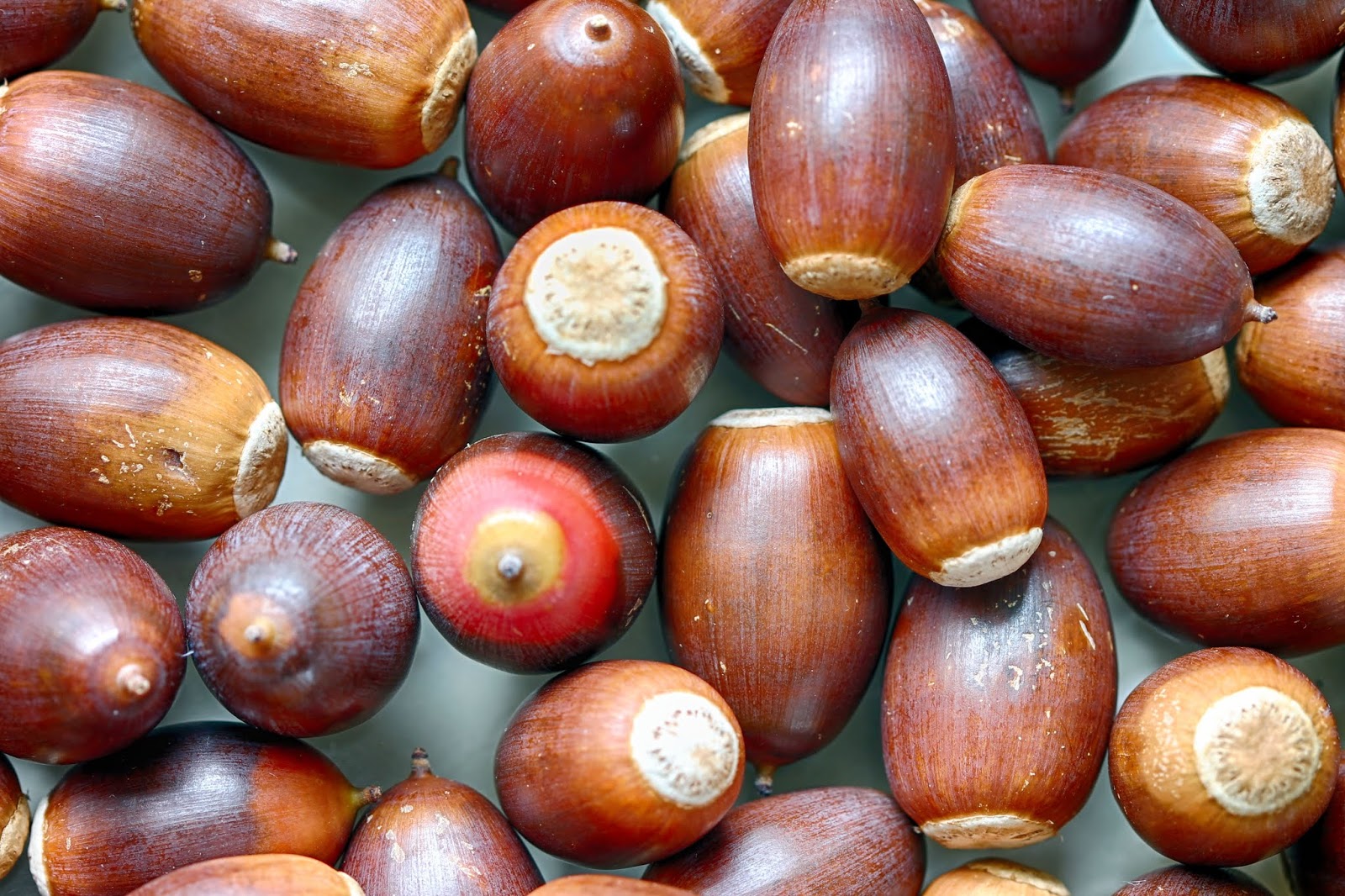
Last fall, inspired as usual by The Homebrewer's Almanac, I collected acorns over a few afternoons. While fresh acorns are loaded with tannins, fermented they are said to take on a wonderful aromatics reminiscent of bourbon, Madeira, and plums. The various parts of any plant usually contain shared compounds (and flavors). It has become fashionable to cook with the "garbage" parts of plants (and animals) usually thrown away. While it takes more effort to prepare collard green stems or pork feet, it can be well worth it. While oak wood is used to age thousands of beers, its acorns, leaves, and bark are not nearly as popular.

I inspected each acorn to remove any that were cracked, or otherwise marred. I briefly rinsed them, and then arranged in a single layer on a shallow baking dish in the basement to allow them to dry.

Acorns before sorting and drying

Apparently my inspection wasn't thorough enough as I missed several small blemishes (example below) that indicated an acorn weevil had laid an egg inside.

Acorn Weevil hole

A week later, after discarding those where a larva bored out, I moved the acorns to five lightly sealed pint mason jars. I didn't add water, microbes, or anything else.

Fermenting acorns in mason jars

Over the next nine months in my 65F basement the acorns slowly fermented on their own. First producing carbon dioxide and the pleasant aroma of ethanol. Then slowly a more complex aromatics of apricot, chocolate, and bourbon. Exactly which microbes are responsible is a mystery to me.

When I visited Scratch Brewing last November (on my drive from St. Louis to Indianapolis for the BYO Boot Camp... next one is March in Asheville) I had the chance to assist Marika on a batch at Scratch, and see their jars of fermenting acorns. Luckily for them, Aaron told me weevils haven't been an issue!

Acorns fermenting at Scratch Brewing

By the following summer, my acorns were smelling like a combination of whiskey distillery, apricot orchard, and old library. While their exteriors were unchanged, the interior transformed from beige to leathery brown. Non-enzymatic browning, that is to say the Maillard reaction may be at work as with black garlic? While these processes are accelerated at high temperature, they still happen when cooler.

I thought an oud bruin-ish base would provide a solid foundation for those darker flavors. I added flaked rye for body and fermented with East Coast Yeast Oud Brune (which contains no Brett, only Sacch and Lacto). ECY Flemish Ale is still hard at work on the other half of the batch. Once the Oud Bruin was finished, I added a tube screen with one cup of the cracked (with a hammer) acorns. After a few weeks I added another cup to increase the flavor contribution.

Cracked acorns

I'm hoping to use the remaining fermented acorns in a small batch at Sapwood Cellars, but the TTB isn't going along with my plans... yet. They've directed me to contact the FDA. It's amazing how many weird chemicals are approved, when a food that people have eaten for thousands of years is not.

Requiem for an Oak

Smell – Even at the higher rate the acorn character doesn’t leap out of the glass. It does have a richer, more woody-fruity aroma than any other quick sour I’ve brewed. I get some of that old book smell mingling with the Munich maltiness. There is also a brighter stonefruit aroma that prevents it from being too heavy.

Appearance – Pretty amber-brown color. Mild haze. Retention of the tan head is OK especially for a sour beer, although nothing remarkable.

Taste – Firm lactic acid, snappy without being overwhelming. The fermented acorns add leathery and fruity depth to the flavor without stepping all over the malt. I’m pretty happy with this as a lower alcohol oud bruin.

Mouthfeel – The flaked rye really helped considering this is a low alcohol sour beer. Doesn’t taste thin or watery.

Drinkability & Notes – For such a unique beer, it is pleasant to drink. The flavors meld nicely and the acorns help to simulate in a way the effect of barrel aging and Brettanomyces.

Changes for Next Time – I’d probably go even more aggressive with the acorn-rate, really to show them off. The beer could be bigger, but more malt might obscure the acorns even more.

Finished acorn oud bruin

Recipe

Batch Size: 11.00 gal
SRM: 18.0
IBU: 2.0
OG: 1.046
FG: 1.010
ABV: 4.7%
Final pH: 3.43
Brewhouse Efficiency: 72%
Boil Time: 90 mins

Fermentables
-----------------
60.4% - 16.00 lb Briess Pilsen Malt
22.6% - 6.00 lb Weyermann Munich I
11.3% - 3.00 lb Flaked Rye
3.8% - 1.00 lb Castle Special B
1.9% - 0.50 lb Weyermann Carafa Special II

Mash
-------
Mash In - 45 min @ 157F

Hops
-------
1.25 oz - 8 Year Old Willamette (Whole Cone, 1.00 % AA) @ 85 minutes

Water
--------
11 g Calcium Chloride @ Mash

Calcium
Chloride
Sulfate
Sodium
Magnesium
Carbonate
100
110
50
15
10
90

Other
-------
Whirlfloc Tablet @ 5 mins
2 Cup Fermented Acorns @ Fermenter

Yeast
-------
East Coast Yeast Flemish Ale
East Coast Yeast Oud Brune

Notes
-------
9/29/17 Harvested five pints of acorns from the White Oak in my front yard. Allowed to dry open in the basement.

10/6/17 4 larvae of an acorn weevil hatched. Tossed any acorns with exit holes, and tried to identify all of those with small entry holes to toss. Moved remaining acorns to one-pint mason jars, attached lids, and returned to the barrel room for fermentation.

Brewed 7/9/18

7/29/18 Added 1 cup of acorns (split and in a mesh tube with marbles) to the Oud Bruin half.

8/18/18 Added another cup of acorns, loose, as the flavor wasn't there yet.

8/28/18 Racked Flemish half to secondary in glass.

9/9/18 Kegged acorn half.

I get a commission if you buy something after clicking the links to MoreBeer/Amazon/Adventures in Homebrewing/Great Fermentations/Love2Brew!
0 Comments
Split Test Batch Rye

I have nothing against brewing to-style. You can make magnificent and delicious beers by using ingredients from a single region with the goal of a classic balance. That isn't who I am as a brewer though. The recipe for Sapwood Cellars' False Dragon is the sort that I'm passionate about. We selected ingredients from all over the globe to create a flavors and aromas that aren't authentic to any one tradition. What I wanted was an earthy-crisp malt flavor, a white-winey hop aroma (for less money than Nelson Sauvin), and a subtle spicy and fruity-boost from the yeast without getting in the way. That required malts from America and England, hops from America and Germany, and yeast from England and Belgium.

Scott adding Centennial hops to the whirlpool

I'd been experimenting with the hop bill for a few months to get the ratio right, and eventually settled on 2:1 in favor of Mosaic. After a few test batches, Scott and I have embraced adding less expensive hops on the hot-side (Cascade, Columbus, Chinook, Centennial etc.) with the more aromatic and expensive varieties saved for the fermentor. I wanted to split my homebrewed test batch to compare S-04 alone against S-04 with 8% T-58. As with Ziparillo, dry yeast is cost-effective especially if you can't repitch thanks to early or mid-fermentation dry hopping. Belgian strains have shown heightened biotranformation abilities is some studies, so it seemed like a good candidate for double dry-hopping.

Dry yeast pitched into a 10 bbl batch

For the 10 bbl batch we decided to fill-in a gap in our range when the first batch of Rings of Light (our Citra dry-hopped hazy pale ale) came in under-alcohol at 4.8% thanks to lower-than-expected efficiency. In effect the two recipes switched places with False Dragon becoming the "bigger" pale ale at 5.3% rather than the 4.7% of the test batch. Our attenuation has been lower than expected across the board for our first five batches too. We're still trying to figure out the cause given it has happened with multiple yeast strains - likely mash related. Luckily our hop flavor and aroma have both been wildly better than either Scott or I have been able to achieve at home, I'm sure surface-to-volume ratio plays a role.

Your first chance to try this beer is at the Sapwood Cellars grand opening, Noon-10 PM on Saturday 9/29. We'll be open Thursday-Friday 4-10 PM and Saturdays Noon-10 PM from then on. Stop in, drink a beer, say hello!

The name False Dragon come from The Wheel of Time series of books by Robert Jordan. My commute has gone from 20 minutes on the subway to my desk job to ~40 minutes by car. Audio books are my new friend. While I'm sure brewing podcasts would be a more productive use of my time, after 12 hours brewing it is nice to have a little escapism.

Test batch False Dragon with S-04

False Dragon S-04

Smell – Had to go for a fresh pour after taking photos as it had gone a hint skunky after five minutes in the sun… Nose is a fresh “true” hop aroma to the Mosaic and Hallertau Blanc. White wine, but also some blueberry and green/herbaceous. Certainly Nelson-reminiscent, but a unique character as well.

Appearance – Pale yellow, pleasantly hazy. Good head and lacing, but the foam itself feels airy on the tongue. I guess I’ve gotten used (and miss) to the contribution of chit malt.

Taste – A firm amount of bitterness in the finish, but it doesn’t linger. Light and bright with the tropical-fruity hops starring. Rye doesn’t really make a strong showing, although I’ve always found it more subtle than some others taste.

Mouthfeel – The rye helps prevent it from being watery, but it is a summery pale ale. Glad we ended up a little higher OG/FG on the big batch. Medium carbonation, nice for a lighter beer.

Drinkability & Notes – A pleasant session IPA. The Mosaic and Hallertau Blanc work better together than apart.

Changes for Next Time – 10% chit in place of the base malt wouldn’t hurt. Could certainly up the rye too for a bigger contribution.

Test batch False Dragon with S-04 and T-58

S-04 and T-58

Smell – More rounded, less grassy-distinct hop aroma. Tropical, juicy, inviting. The green flavors are now more honeydew melon. Impossible to say how much of that is actual hop chemical reaction, or synergistic between the hops and esters. Lightly bready.

Appearance – Looks similar in terms of head, color, and clarity.

Taste – Lower perceived bitterness. A more saturated/integrated fruity hop flavor. Passionfruit especially. I think this is the more approachable and interesting beer, and distinct from the other English-only fermentation we are doing (using RVA Manchester). Slightly elevated phenols, but much lower than from the WB-06 in Ziparillo.

Mouthfeel – Slightly creamier (perhaps just the lower perceived bitterness?), identical carbonation.

Drinkability & Notes – I was able to identify these pretty easily in a blind tasting. It is amazing how much impact such a small amount of yeast can make.

Changes for Next Time – We decided to back down the T-58 4.4% of the blend to allow a bit more of that fresh/distinct hop character through. Other than the higher gravity, the recipe was otherwise unchanged for the 315 gallon batch! We’ll probably up the rye for batch #2 now that we know we can handle higher percentages of high beta-glucan huskless grains.

False Dragon - Test Batch

Batch Size: 11.00 gal
SRM: 4.1
IBU: 30.0
OG: 1.046
FG: 1.012/1.012
ABV: 4.7%
Final pH: 4.43/4.49
Brewhouse Efficiency: 72%
Boil Time: 60 mins

Fermentables
-----------------
75.6% - 17 lbs Rahr 2-Row Brewer's Malt
14.4% - 3.25 lbs Briess Rye Malt
10.0 % - 2.25 lbs Crisp Floor Malted Maris Otter

Mash
-------
Mash In - 45 min @ 156F

Hops
-------
8.00 oz Centennial (Pellet, 7.20%) @ 30 min Steep/Whirlpool
6.00 oz Mosaic (Pellet, 12.25%) @ Dry Hop Day 3
3.00 oz Hallertau Blanc (Pellet, 10.50%) @ Dry Hop Day 3
6.00 oz Mosaic (Pellet, 12.25%) @ Dry Hop Day 7
3.00 oz Hallertau Blanc (Pellet, 10.50%) @ Dry Hop Day 7

Other
-------
1 Whirlfloc Tablet @ 5 mins

Water
-------
18 g Calcium Chloride
12 g Gypsum (Calcium Sulfate)
6 tsp Phosphoric Acid 10%

Calcium
Chloride
Sulfate
Sodium
Magnesium
Carbonate
150
150
150
15
10
90

Yeast
-------
11.5 g SafAle S-04 English Ale
or
11.5 g SafAle S-04 English Ale
1 g SafBrew T-58 Specialty Ale

Notes
-------
Brewed 8/19/18

Mash pH = 5.44 (at mash temp) after acid additions.

Collected 14.5 gallons of 1.046 runnings.

Added heat to maintain a whirlpool temperature of 200F.

Chilled to 64F. Half with 1 g of T-58 and 11 g of S-04, and half with only 11 g of S-04. Left at 62F ambient to begin fermentation after shaking to aerate.

69F internal temperature during peak fermentation.

8/22 Dry hopped each with 3 oz of Mosaic and 1.5 oz of Hallertau Blanc.

8/27 Second dry hop for both.

9/1 Kegged both, 1.012, moved to fridge to chill.

9/2 Hooked up to gas and tapped to remove sludge. S-04 batch clogged poppet a few times.

I get a commission if you buy something after clicking the links to MoreBeer/Amazon/Adventures in Homebrewing/Great Fermentations!

Brite tank sample of False Dragon

0 Comments
There are a lot of IPA drinkers out there, but I get the feeling that there are just as many people who would enjoy the fruity-tropical flavors in New England IPAs, but were scared off by the IBU-arms-race of earlier this decade. I wanted to develop a session beer for Sapwood Cellars that showcases fruit-salad hoppiness without assertive bitterness. Sort of a Belgian white, with hops instead of spices. The result is a beer we're brewing 10 bbls of today... Ziparillo!

Dry hopping mid-fermentation is a great technique for chasing away raw-green hop aromatics that turn-off some drinkers. The problem is that adding hops early makes harvesting yeast far more difficult. Our solution was to use dried yeast. For a fraction of the price of a liquid pitch (~$60 for 500 g dried) it means we don't feel bad not cropping and repitching. Dry yeast also allows for easy strain blending by weight. In this case the test batch was 85% S-04 and 15% WB-06. The goal was to support the fruity hops with a little banana from the hefeweizen strain. An idea I first tried in my American Oat Ale.


The grist is a callback to what we developed for Modern Times Fortunate Islands, still my favorite of their regular offerings. The grains were in turn inspired by Three Floyds Gumballhead. We decided to go a bit lighter on the wheat until we get used to how large amounts of huskless grains lauter on our Forgeworks brewhouse. Hot-side hopping is a single dose of Cascade in the whirlpool. A classic variety with a good blend of oils, but without excessive alpha acids (or cost). Despite that, for the up-scale we're going to lower the whirlpool temperature to ~195F with a barrel of cold water at flame-out to keep the IBUs under 20. Dry hopping with Amarillo for stonefruit aroma.

Hefeweizen yeast, CaraVienna, Cascade, and Amarillo is a combination I tried back in 2010 for this Hoppy Hefeweizen. Not the same intended balance on that batch, but a similar palate of flavors.


The wrinkle in this test batch was that I split it pre-boil. I've been editing Scott's draft for "The New IPA" and the research suggested that many hop oils peak very quickly at higher temperatures and then dissipate. So I split the batch, half with a 20 IBU addition at 60 minutes followed by a flame-out addition immediately after turning on the immersion chiller. The other half I added a hop-stand/whirlpool addition allowing it to sit for 45 minutes before starting the chill. I even left the heat on low to better replicate the slow cooling of a commercial-scale whirlpool.

Going in I was suspicious. I'd changed from quick-chilling to hop-stands a few years ago, and felt that my beers had gotten a better more saturated hop flavor. The beers came out surprisingly similar, but not exactly the same.

Ziparillo - Quick Chill

Smell – Clean yeasty-doughy nose. Banana. Cascade grapefruitiness shines through as the dominant hop character. Certainly reminds me most of hoppy hefeweizens that I’ve brewed previously. Surprising how much yeast character there is from a low percentage of WB-06.

Appearance – Pale-gold, mildly hazy of the standard hefeweizen type. Not milky-haze. Good head retention and cling.

Taste – Bitterness is present, a bit higher than 20 IBUs in my estimate. Crisp finish with some lingering hop resin. Amarillo comes in a bit towards the end, apricot. Odd that I get the kettle hops in the nose and the dry hops in the flavor. The quick chill seems to have imparted a more dry-hop like character. Dry, with a finish that reminds me of some sort of herbal spritzer?

Mouthfeel – Snappy, good firm carbonation, but not as high as a traditional hefe. Dry, slightly tannic finish.

Drinkability & Notes – A nice session beer. The polyphenols from the early-boil addition may be making the bitterness come-across higher than the calculated IBUs would suggest.

Changes for Next Time – Drop the bittering addition to 10 IBUs, and this would be much closer to the balance I was looking for. Nice as is, but likely too bitter for many hop-phobes. Yeast character is a bit distracting.

Ziparillo - Hop Stand

Smell – Similar, but the yeast character comes across as leaning more bubblegum than banana. Slightly more phenolic as well, peppery. Hops are better integrated into the yeast character or maybe just less assertive. I get honeydew melon.

Appearance – Identical. In this case the timing of the boil hops and speed of chilling doesn’t seem to have effected clarity.

Taste – Bitterness seems lower/smoother, and the finish rounder despite the same calculated IBUs. Like the nose the line between fruity yeast and hops is less distinct than the other version. There is more banana than in the nose, but it is still relatively subdued. Hops are bright and citrusy.

Mouthfeel – Smoother, less tannic. Coating compared to the other half. That isn’t a character that necessarily sounds beneficial to a session beer, but in this case it makes it easier and more pleasant to drink.

Drinkability & Notes – Closer to what I was looking for, the hops and yeast meld together into a pleasant fruit salad. Rather than a generic fruitiness throughout the effect is different flavors from nose and mouth, evolving as it warms. One friend noted that it has sort of an Allagash White thing going on, which was exactly my intent.

Changes for Next Time – We’ll be cutting the WB-06 from 15% to 7.5% in the big batch. The taller fermentor should suppress ester production as well. We’ll add a barrel of cold water at the end of the boil to lower the temperature and further smooth the hop bitterness contributed by the whirlpool addition.


Recipe

Batch Size: 12.00 gal
SRM: 4.8
IBU: 18.3
OG: 1.048
FG: 1.008
ABV: 5.25%
Final pH: 4.60
Brewhouse Efficiency: 72%
Boil Time: 60 mins

Fermentables
-----------------
68.2 % - 15 lbs Rahr 2-Row Brewer's Malt
22.7 % - 5 lbs Briess Red Wheat Malt
6.8 % - 1.5 lbs Briess Caravienne
2.3% - .5 lbs Rice Hulls

Mash
-------
Mash In - 45 min @ 158F

Hops
-------
V1
1.00 oz Cascade (Pellets, 5.5% AA) @ 60 min
3.50 oz Cascade (Pellets, 5.5% AA) @ Flame-Out
2.00 oz Amarillo (Pellets, 9.2% AA) @ Dry Hop Day 2

V2
3.50 oz Cascade (Pellets, 5.5% AA) @ Whirlpool 45 min
2.00 oz Amarillo (Pellets, 9.2% AA) @ Dry Hop Day 2

Other
--------
1 Whirlfloc Tablet @ 5 min

Water
-------
18.00 g Calcium Chloride
5.50 g Gypsum (Calcium Sulfate)
9.00 tsp Phosphoric Acid 10%

Calcium
Chloride
Sulfate
Sodium
Magnesium
Carbonate
140
170
100
15
10
90

Yeast
-------
22 g SafAle English Ale S-04
4 g Safbrew Wheat WB-06

Notes
-------
Brewed 8/5/18

5.28 at mash temperature after all additions (~5.5 corrected to room temperature).

Split between two boils:

1. 1 oz of Cascade @60 min, and 3.5 oz of Cascade with a quick chill at flame-out (added hops right after starting IC).

2. 3.5 oz of Cascade with a whirlpool at 212F (with heat) for 45 minutes... mostly stayed 190-200F.

Chilled to 68F, pitched 1 pack of S-04 and 2 g of WB-06 into each (no rehydration). Shook to aerate.

Same fermentation, beer temp 65F.

8/7/15 Dry hopped ~36 hours after pitching. Set beer temp to 68F to continue fermentation.

Kegged 8/16/18

I get a commission if you buy something after clicking the links to MoreBeer/Amazon/Adventures in Homebrewing/Great Fermentations!
0 Comments