white

If you want to know who Averie Swanson is, read her beer labels. “I Am Because We Are.” “The Grace of Maybe.” “At the Still Point of the Turning World.” They point toward a philosophy that has guided her through nearly a decade in mixed-culture fermentation. Her newest venture, Keeping Together, isn’t just her brewery’s […]

The post The Still Point of the Turning World: Overcoming Imposter Syndrome appeared first on CraftBeer.com.

0 Comments

My parents didn’t drink much when I was growing up. Any alcohol that was in the house was hidden—hard stuff like vodka and tequila lived in a rarely opened cabinet in an armoire in the dining room, and what beer we had was stashed away in a second refrigerator in the garage. For years, the […]

The post One Style for All: The Complexity of Mexican Lagers and Latinx People in the Brewing Industry appeared first on CraftBeer.com.

0 Comments

Hops get all the attention—all the fame, puns and glory while yeast does almost all the work. Hops dominate label space, and varieties like Cascade, Strata and Citra are practically house-hold names, thanks to the seemingly unquenchable demand for every category of IPA. Yet basic beer ale yeast Saccharomyces cerevisiae is abstract to most people, […]

The post Yeast, A Romance Story appeared first on CraftBeer.com.

0 Comments

Seven Latino men gathered on a Hacienda Heights driveway on a warm Southern California night. Shiny homebrewing equipment filled the garage so the fledgling craft brewers stood in the car port—pint glasses in hand—sharing names, hometowns and brewing experiences. The SoCal Cerveceros homebrew club was born. “We didn’t really know what it was going to […]

The post SoCal Cerveceros, America’s Largest Latino-Based Homebrew Club, Is Making Its Mark appeared first on CraftBeer.com.

0 Comments
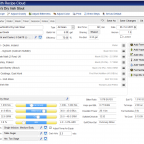
This week I wanted to share a more detailed look at the upcoming Web based version of BeerSmith which is scheduled for release in June of 2021. It will be available to all Gold+ license holders of BeerSmith 3. When released, you can simply log into your existing BeerSmithRecipes.com account and edit recipes in your […]
0 Comments
This week I take a look at one of Germany’s most popular beer styles, the light lager known as German Helles. Helles is a traditional German Lager produced primarily in Southern Germany (Bavaria) around Munich. The word “hell” in German can be roughly translated as “pale, light or bright” in English. The History of Helles […]
0 Comments

Many in the world of craft beer seek out the artisans of coffee who show the same amount of love to coffee that craft brewers pay to craft beer. As these brewers develop a love and appreciation for craft roasters, some brewers have found ways to utilize a roaster’s skill and attention to detail to elevate the brewery and its offerings.

The post The More Fulfilling Cup: Craft Brewers and Craft Roasters Find Common Threads Together appeared first on CraftBeer.com.

0 Comments

The #1 winter seasonal beer1 returns with a crisper and brighter recipe and festive inspiration for holidays spent at home BOSTON, MA, Nov. 9, 2020—Samuel Adams brewers recognize the winter season will feel different this year, with many Americans taking “home for the holidays” literally. To spread some holiday cheer when drinkers need it most, […]

The post Samuel Adams’ New Winter Lager Brings A Wintery Remix To Holiday Classics appeared first on CraftBeer.com.

0 Comments
My homebrewing frequency has taken a nosedive recently (surprise), but I still try to find time to brew a weird batch when I can. In August, when Scott and I drove to pick-up our first hop order in western Maryland, I noticed that Staghorn Sumac was in full bloom along I-270 . I’d read about flavoring beer with it in The Homebrewer’s Almanac, but never actually tasted a beer brewed with it. Sumac is tart and fruity, traditionally used in a tart lemonade-like beverage.

Staghorn Sumac "Berries"

I pulled over and harvested about a pound. The range I’d read was 1-5 lbs per 5 gallon batch. Without a beer ready for them, I took the clusters of dusty berries off of the central twig, vacuum sealed them, and froze. That was enough of an excuse to brew a batch of Berliner weisse (fermented with US-05 and Omega Lacto Blend - similar otherwise to this recipe). After primary fermentation I racked 1 gallon onto the resulting .75 lbs of sumac, and another onto .5 oz of dried Turkish sumac from Penzeys for a month. Obviously if the dried version is just as good, it certainly would be easier!

Me, harvesting sumac


Dried Turkish Sumac Berliner

Smell – Aroma is light, doughy-grain, lightly citrus and roasted pear. An odd note of cinnamon as well.

Appearance – Clear pale yellow. It’s almost so pale that yellow isn’t the right word, it looks washed out, faded. Retention isn’t great, but the tight, white head sticks around for much longer than the other half of the batch.

Taste – Bright acid without being obnoxious. The finish has an odd fall-spice note as in the nose that I suspect is from the sumac. Dry without being a desert.

Mouthfeel – Classic Berliner, light and spritzy.

Drinkability & Notes – The not-entirely-pleasant musty-herbal flavor the dried sumac provided when the beer was young seems to have mostly faded to a light spiciness. I’m not sure I’d even pick it out if I didn’t know it was in there.

Changes for Next Time – Maybe a different/fresher source of dried sumac would provide a better flavor and aroma?

Staghorn Sumac Berliner

Smell – Aroma has the generic fruitiness of Hawaiian Punch, or Hi-C, but with an herbal hint of a Ricola cough drop. I don’t get any of the base beer, at this elevated rate it is all sumac. Certainly in the same sort of flavor-family as hibiscus.

Appearance – To go along with the aroma, it has the color of Hawaiian Punch. Similar head retention too…

Taste – The same fruit flavor from the nose, but more pronounced cherry candy. It’s a really fun flavor, that doesn’t stray into cloying. Acidity is snappy, sort of Vitamin-C, quick and punchy. No sweetness, finally breaks the comparison to "fruit" beverages.

Mouthfeel – Light, medium+ carbonation, but not excessively thin or harsh.

Drinkability & Notes – Staghorn sumac is a foraged ingredient that has a real chance for broader appeal. The flavor is fun, quenching, and somewhat familiar. The color certainly doesn’t hurt either. With how much it took, a mild base beer like this makes the most sense.

Changes for Next Time – I was sort of hoping this one wouldn’t be delicious so that I didn’t have to source a couple hundred pounds to put into a beer next summer. Likely could drop down closer to .5 lbs/gallon for a more balanced beer, but it is delicious as is!


I’m hopeful I can get this formula approved by the TTB for Sapwood, as there are already a few commercial beers from the likes Sumac Sour from Four Quarters, Backroads from Suarez Family, and of course several sours and saisons from Scratch. That said, it seems like they are clamping down as I had both acorns and Eastern Red Cedar rejected already. I’ve had several brewers tell me that the step isn’t necessary unless you are getting label approval (not true) or that it is better to ask forgiveness than permission…

I'll be making the trip down to Asheville, NC March 22-23 for another round of BYO Boot Camps! As usual I'll be talking about Wood/Barrels one day and Sour Beers the other. I said it before, but this really is looking like the last one of these for me given how much time running a brewery takes!
0 Comments