malts

Narragansett New Belgium Nose x NorseWest

(PROVIDENCE, R.I.) – Iconic New England brewer Narragansett Beer today announces its partnership with Colorado’s New Belgium Brewing to launch the craft Nordic-inspired farmhouse ale Norse x NorseWest. Influenced by the rich history of brewing during the Viking Age, Norse x NorseWest is a modern take on historical tastes, crafted with American malts and Nordic yeast […]

The post Narragansett Beer Collabs with New Belgium on Norse x NorseWest appeared first on The Full Pint - Craft Beer News.

0 Comments
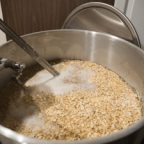
This week I take a look at the differences between alpha and beta amylase which act during the mash to convert longer starch chains to simple sugars in beer. Alpha vs Beta Amylase Enzymes are naturally produced in malted barley during the malting process. Chief among these are alpha amylase and beta amylase. They are […]
0 Comments
Today I focus on some of the principles of good beer recipe design, and how they can help improve your beer. As many of you know I’ve been doing presentations and classes on the topic of beer recipe design for some time now, and thought it best to summarize some of the key elements below: […]
0 Comments
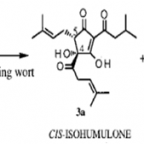
This week I take look at hop isomerization in beer brewing and how it applies to brewers. Isomerized alpha acids in beer are the primary bittering compound used to offset the sweetness of the malt in beer. What is Isomerization? Isomerization is a process where a molecule is transformed into another molecule that contains the […]
0 Comments
This week I take a look at one of Germany’s most popular beer styles, the light lager known as German Helles. Helles is a traditional German Lager produced primarily in Southern Germany (Bavaria) around Munich. The word “hell” in German can be roughly translated as “pale, light or bright” in English. The History of Helles […]
0 Comments
I recently posted both yeast and hops updates for BeerSmith 3 and BeerSmith 2 to the add-ons server in BeerSmith. These are recommended downloads for BeerSmith users. These add-ons update the core yeast and hops listings to include new yeasts such as Kveik as well as some 63 new hop varieties. To download these updates, […]
0 Comments
I’m happy to announce the official release of the BeerSmith 3.1 update. This update includes some significant updates to the BeerSmith data storage model, TILT data import, new brewing features and a large number of bug fixes. This release is also a very important foundational step towards establishing both an online version of BeerSmith and […]
0 Comments
So odd to get one of my favorite and least favorite sours out of the same wort (recipe). The half with cherries was magical, the half without is bland and listless. In addition to no cherries, this half had BM45 red wine yeast and Wyeast Roeselare in place of 58W3 and dregs from a De Garde bottle. I had reasonable results with BM45 in this Red Wine Yeast Flemish Ale, so I don't think it is to blame.

It seemed like a good time to revisit this batch because the scaled-up version went into barrels on Saturday. For the 10 bbl batch we used 58W3 for primary fermentation in stainless steel. We procured three Pinot Noir barrels plus two bourbon barrels for aging. My hope is that the spirit barrels provide a nice vanilla character to mingle with the cherries. Each will get a dose of microbes, East Coast Yeast Flemish Ale, Wyeast Roeseleare, and maybe additional microbes from our collection. Two of the barrels got 25 lbs of dried sour cherries. Next summer, when fresh sour cherries are available, we'll select barrels and blend into a tote for additional fruiting.


Wine Yeast Sour Red

Smell – Spice, caramel, apple sauce. A weird mix that doesn’t really remind me of a Flemish red. That wouldn’t be a bad thing if the flavors were enticing or synergistic.

Appearance – Pretty thick head. Nice reddish-brown color with abundant chill haze (judging from the clarity of warmer pour previously). Pretty beer at least!

Taste – Interesting spice notes as in the nose. Cinnamon especially. The fruitiness reminds me of quince paste, sort of apple, but not quite. Tart, but not really sour. The malt is one-dimensional, toasty. Not impressed by Roeselare as the sole source of microbes.

Mouthfeel – Thin, a bit watery despite finishing at 1.016. Solid medium-carbonation.

Drinkability & Notes – A real meh beer. Not off in any specific way, there just isn’t anything to carry the beer.

Changes for Next Time – For the scaled-up version, we swapped the Briess base malts for equivalent Castle malts. Other than the variety of microbes and barrels, we'll be sticking pretty close to the script for the cherry version.


0 Comments