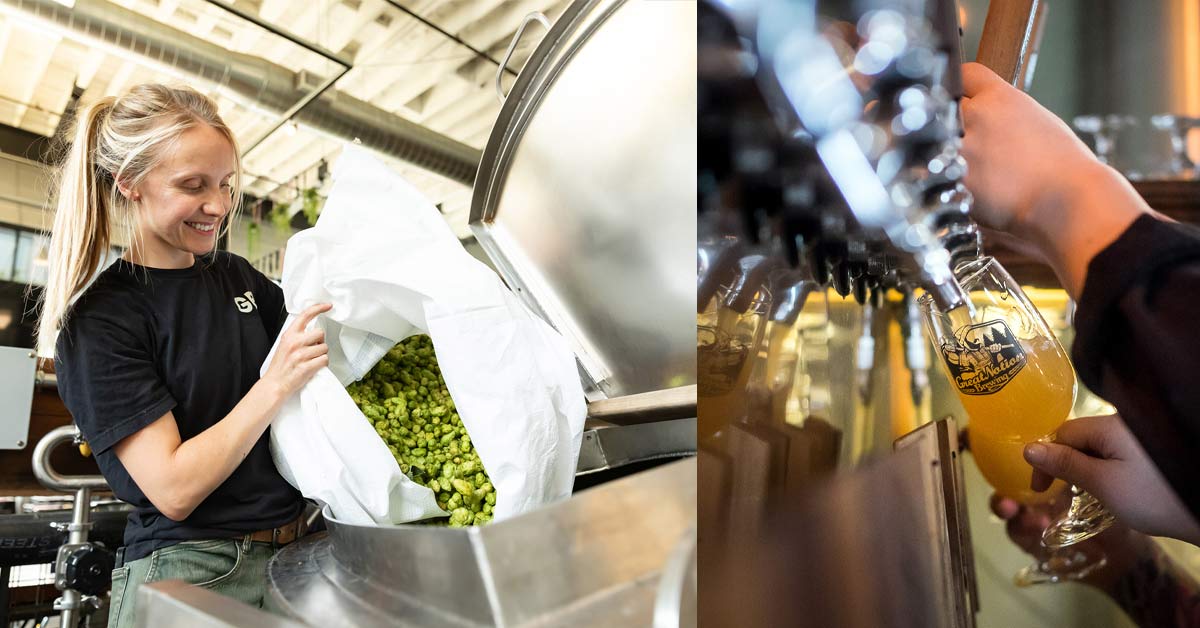
It’s a Tuesday night in early October. I’m at Grand Fir Brewing, a Southeast Portland, Ore., brewpub with a décor of wood, rustic steel, and a warmth that embodies the hip-meets-historic vibe of its Buckman neighborhood. Well, that’s the bustling taproom, anyway.
At the moment, I’m backstage, down a long hallway at the building’s industrial rear, behind a nondescript door in a windowless room that more closely resembles a secret hunting lodge. I’m leaning on an actual barrel head, sipping festbier, a golden German lager, by candlelight staring at a taxidermied rattlesnake in the lamplit shadow of a majestic stag’s head.
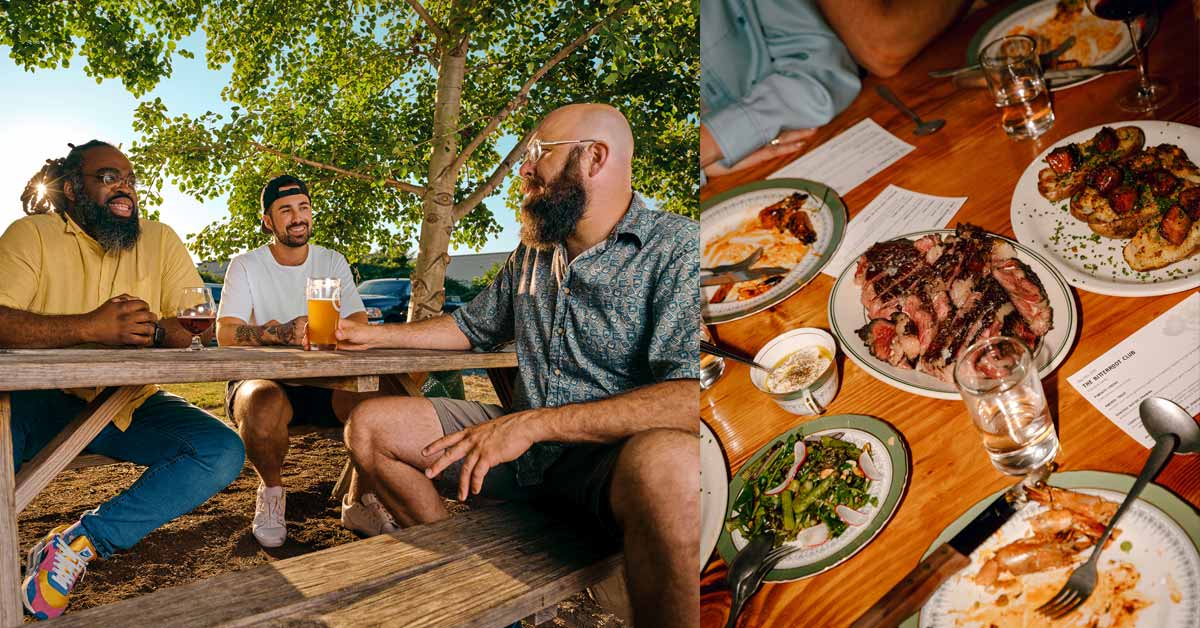
This is The Bitterroot Club, Grand Fir’s weekly supper club where the brewery’s co-owner, Doug Adams, flashes the culinary skills that made him a Top Chef finalist and semifinalist for the James Beard Rising Star Award. The prix fixe menu features seasonal and locally sourced ingredients paired with the beer crafted by his co-owner and wife.
Whitney (Burnside) Adams is a pedigreed vet of the Northwestern beer scene, including jobs at Portland pillar Upright Brewing, Seattle’s Elysian, and brewmaster at regional powerhouse 10 Barrel Brewing Company. Tonight, I’ll be pairing her aforementioned bready Tamarack Fest festbier with Doug’s Columbia king salmon with lemon, fig, and basil, adding some malty sweetness to the rich, savory fish. Next, a charcoal-grilled porkchop with Nardello peppers and hazelnuts provides a salty smokiness that is cut nicely by a crisp and clean-finishing Bandit Run Mosaic American IPA. And then a light-bodied, citrusy Fresh Hop Strata complements lemon buttermilk pie for dessert.
The Bitterroot Club is certainly a premium attraction (the prepaid reservation is $135 per person), but it’s also an extension of the Adamses’ ethos when they opened Grand Fir in November 2022. Even the regular brewpub menu features artistic twists such as jalapeño Old Bay tartar on a shrimp roll, garlic buffalo sauce on a fried chicken sandwich, and caramelized onions on the wildly popular double-patty Grand Fir Burger. “The word ‘elevated’ has been overused a lot, but it does suit us,” says Whitney. “We wanted people to not only get the experience of my beer, but to use Doug’s background to create an equally good food experience. I felt that if I were to just open up a brewery, I honestly don’t think it would make it. You need a certain angle these days to be successful.”
This, of course, is a common refrain from brewers all over the country, scurrying to attract on-premises patrons in a shrinking marketplace. But for a bona fide brewing badass such as Whitney to say this is more than modesty or even a reflection of the nationwide post-pandemic struggles. Yes, brewers across the country are transforming their spaces, installing dog parks and arcades and pickleball courts to bring people in and maintain a foothold in an increasingly slippery marketplace. But while Portland has certainly not been untouched by economic woes and shifting tastes, in this city and this state, the issue is less that there are fewer beer drinkers than that the drinkers here are more discerning. After all: This is Beervana.
A Love for Beer
“There’s a special relationship between brewers and drinkers in Oregon and Portland in particular,” says Ben Edmunds, brewmaster at Breakside Brewing. “There are consumer expectations. People feel like they can find good beer everywhere here.”
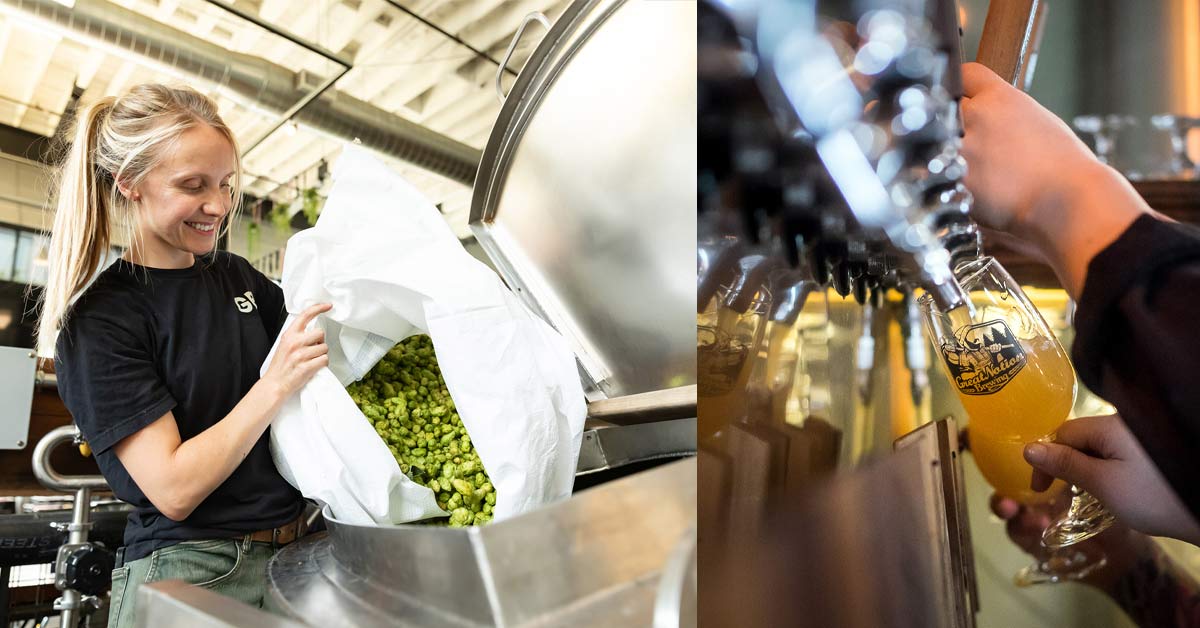
They certainly can. In just two days there, I bounced from world-class brewery to world-class brewery, each with its own distinctive personality. There was the lager-centric Wayfinder slinging the Cold IPAs (brewed with lager yeast) it helped popularize; the heavy metal hazy house of Brujos Brewing; the more experimental hipster hangout Living Häus Beer Company; the standard-setter for the citrusy-piney Northwest-style IPA, Breakside Brewery; Portland-born regional pastry sour powerhouse Great Notion; and longtime local-turned-national stalwart Deschutes, which has recently invested heavily in meticulous NA versions of its core beers like Black Butte Porter and Fresh Squeezed IPA. There are so many more amazing places that I just didn’t have time to make it to.
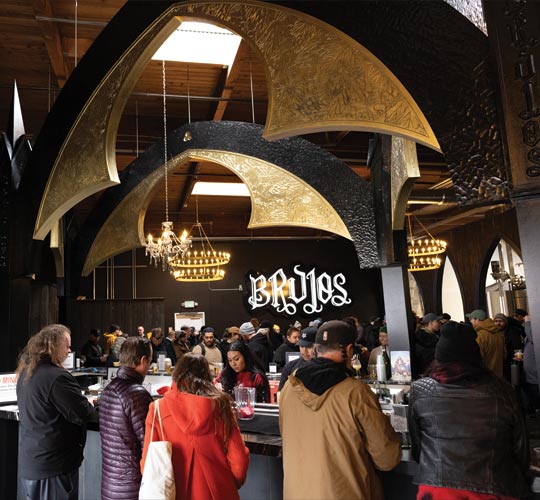
“People here are passionate, they’re fans. They have a good pulse on what’s happening with each brewery,” says Whitney Adams. “I feel like we have a savvier group of beer drinkers here, too. That’s what holds us together. It’s not just the brewers themselves; it’s the customer base. It’s the love we all share for beer.”
Portland’s long affinity for craft beer makes perfect sense when one considers the proximity of the fields of the Willamette Valley, home to some of the world’s most coveted hops. The valley sits not too far from Yakima, Wash., the birthplace of Bert Grant’s hop-packed American IPA, the beer that still defines craft in the U.S. But according to at least one PDX beer luminary, the city is a haven for independent beermakers as much because of the roots that didn’t grow in its silty clay soil.
“The area is really geographically isolated, so Miller and Budweiser have always had a minor presence up here,” says Van Havig, master brewer at Gigantic Brewing, which he co-founded with Ben Love in 2012. Havig says that because Big Beer never bothered the early brewpubs and local distributors in Portland, they were left to dominate the local market. “No one uses the term ‘craft beer’ or ‘microbrew’ in Portland,” he says. “Here, it’s just beer.”
Havig had attended Portland’s Reed College between 1988 and 1992, witnessing the dawn of brewpub culture in the city before moving to Minneapolis, where, after dropping out of a PhD program in economics, he started brewing commercially himself. (In fact, the term “Beervana” in reference to Portland’s budding brewing culture was first coined by Willamette Week, a local alt-weekly, in 1994.)
Havig returned to PDX in 2000 to head up the city’s Rock Bottom Brewery, an experience he remembers as “intimidating.” “It was like walking into the big leagues,” says Havig. “Portland in the 2000s was the most developed craft market in the country. Where’s the center of the craft beer world? Other places, like Colorado, have relevance. But it’s Portland—it’s always been Portland.”
Expanding Palates
It wasn’t just taprooms and brewpubs. Havig remembers that someone could walk into the most squalid-looking dive bar and find a tap of Pabst Blue Ribbon ironically standing beside five or six local brews. In fact, he remembers six omnipresent labels that spanned the spectrum of styles: Widmer Brothers’ Hefe, Deschutes’ Mirror Pond Pale Ale and Black Butte Porter, Portland Brewing’s MacTarnahan’s Amber Ale, Full Sail Brewing’s Amber Ale, and BridgePort Brewing Co.’s iconic India Pale Ale.
The latter, a blast of citrus, floral, straw grass, and a touch of pine from five local hop varietals, was introduced in 1996. It quickly became one of the templates for what came to be known as the Northwest-style IPA—a brash, in-your-face hop bomb that, back then, flummoxed outsiders, included Havig’s regional manager.
“It was 2006 or 2007, and we and Seattle were the only Rock Bottoms with an IPA on tap,” he remembers. “The manager was like, ‘This is really aggressive.’ I told him, ‘I understand your concerns, but you need to understand that you are somewhere different now.’”
By the turn of the 2010s, Portland palates had expanded beyond the standard IPA. Havig and Love opened Gigantic in 2012, providing the in-demand hop-forward ales, but also trying to stay slightly ahead of the curve with Belgian ales, lagers, and wild inventions such as a pink beer with Japanese black rice and plums. “You could make anything, and it would sell,” he says. “You could make a smoked hefeweizen and sell 135 barrels. People here were super experimental.”
The way Portlanders drank was shifting, too. Beyond the basic dichotomy of traditional brewpubs and straightforward production breweries, specialized beer bars began popping up, and breweries found they could combine distribution (exceeding 10,000 barrels) with a taproom that could grow the brand while allowing eager patrons to drink from the source. By the mid-2010s, grocery stores and even convenience stores tapped into the zeitgeist.
“There was a real growler phenomenon,” says Edmunds, who moved to Portland in 2007 before helping found Breakside Brewing three years later. “There were dedicated beer shops and every gas station and grocery store put in a draft tower and added a bar. The creation of all that new draft real estate provided a once-in-a-generation opportunity for new and small breweries.”
Meanwhile, Breakside and Gigantic and the slew of new breweries that would emerge over the next 10 years kept pushing experimentation. For tipplers tired of ambers, porters, and even (gasp) maybe a little embittered with NW IPAs, they began barrel-aging programs, launched kettle and pastry sours, and started dry-hopping their IPAs to unlock flavors beyond pine and grapefruit.
The continued innovation has been driven in part by the only trend Portland has seemingly been behind on: Cultivating a brewing family tree. Edmunds says that for the first few decades of Beervana, brewers tended to stay put instead of leaving to start new ones. This gave interlopers like him the opportunity to enter the market with fresh takes. But now, that’s largely changed as longtime Portland brewers such as Whitney Adams have branched off to start their own establishments. “This influx of new blood keeps the scene vibrant,” Edmunds says. “These places like Grand Fir, Great Notion, Ruse, and Living Häus are being opened by people who are experienced and have well-regarded pedigrees from the city and state. And they all make high-quality beer.”
That doesn’t mean Portland isn’t facing its share of challenges. Real estate prices are skyrocketing. Things are tough for any small business. “But our resilience is strong,” says Whitney Adams. “We still support each other. People show up and go out and support these breweries.”
Edmunds says that’s largely because, after three-plus decades, craft beer is engrained in the culture of Portland and Oregon. People here want beer, need beer, and live beer. This is still Beervana. “The wildly different thing about Portland is that no one says, ‘Would you like to get a craft beer with me today?’ You just say, ‘Let’s go get a beer,’ and it’s a craft beer,’” says Havig. “It’s normal; it’s what we drink. The reality is, this is where craft beer won.”
The post Finding Beervana in Portland, Oregon appeared first on CraftBeer.com.